UK PM Starmer Resigns Britain Leadership Crisis
UK Prime Minister Keir Starmer has announced his resignation as both Labour leader and head of government. The move ends months of political pressure and opens a new leadership race in Britain at a time of economic strain and political instability. Starmer said he will remain in office until a new Labour leader is chosen.
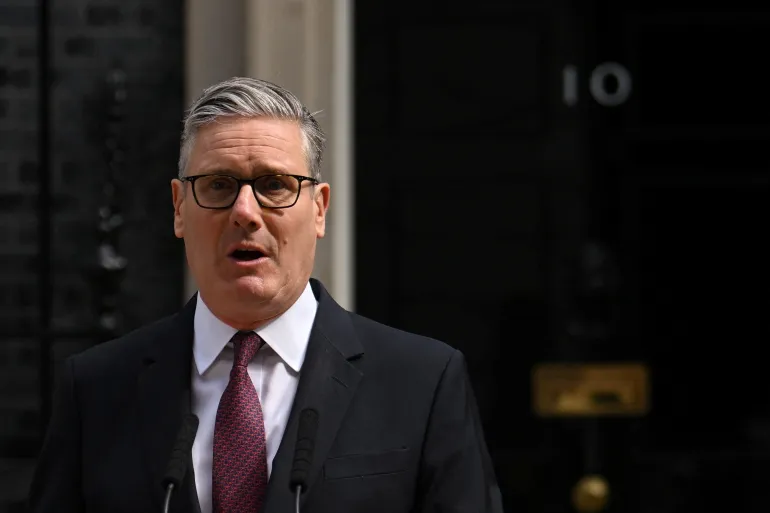
UK Prime Minister Keir Starmer has announced his resignation as both Labour leader and head of government. The move ends months of political pressure and opens a new leadership race in Britain at a time of economic strain and political instability.
Starmer said he will remain in office until a new Labour leader is chosen. He described the transition as necessary to ensure an orderly handover of power. His announcement came outside 10 Downing Street in London on Monday morning.
The resignation follows growing internal pressure within the Labour Party. Poor results in local elections in May weakened his position. Some lawmakers also questioned his leadership and policy direction, leading to a growing internal rebellion.
Starmer came to power less than two years ago after a major Labour victory in the 2024 general election. That win gave the party one of its largest parliamentary majorities in modern history. However, his government quickly faced challenges linked to economic pressure and internal divisions.
A key political moment came when Andy Burnham won a strong victory in a special election on June 18. His rise has increased speculation that he could become a leading contender for the Labour leadership and the role of prime minister.
In his resignation speech, Starmer said leading the country had been the proudest moment of his life. He said his government had worked to improve Britain’s global standing and attract investment while strengthening workers’ rights.
However, he also admitted that members of his own party had lost confidence in his ability to lead them into the next general election. He said he accepted the decision of his parliamentary party and would step aside.
Financial markets reacted with caution to the political news. The British pound fell slightly against the US dollar, while government bond yields stayed mostly stable in early trading. Analysts said investors are watching closely for signals about future fiscal policy.
Economists say the United Kingdom continues to face long term economic challenges. These include high borrowing costs, inflation pressure, and slow productivity growth. Some analysts also warn that political instability adds uncertainty for investors.
Starmer’s resignation makes him the latest in a long line of British leaders to leave office early. The country has now had seven prime ministers in 10 years, reflecting a period of repeated political change since the Brexit vote.
That period began after David Cameron resigned following the 2016 referendum. He was succeeded by Theresa May, who struggled to manage Brexit negotiations and stepped down after three years.
Boris Johnson then took office but resigned in 2022 after multiple political scandals and resignations from his government.
He was replaced by Liz Truss, whose short term in office ended after just 50 days following market turmoil caused by her economic plan.
Rishi Sunak followed, facing inflation and a cost of living crisis linked to global energy shocks and the war in Ukraine.
Starmer himself won the 2024 general election in a landslide against Sunak. His government secured a large parliamentary majority but later struggled with declining approval ratings and internal disputes.
His administration also faced criticism over fiscal policy, welfare reforms, and political appointments. These issues deepened divisions within the Labour Party and weakened his authority over time.
Public opinion has also shifted. Recent polling suggests a majority of voters believe Starmer should step down, reflecting growing dissatisfaction with his leadership and the government’s performance.
The resignation now triggers a formal leadership contest within the Labour Party. Candidates are expected to emerge quickly, with internal discussions already underway among senior figures.
Andy Burnham has already received support from some party members, while others are expected to enter the race in the coming days. The outcome could reshape Britain’s political direction for years ahead.
Starmer will remain in office until a successor is chosen. That process could take weeks depending on how quickly a consensus forms within the party.
The leadership change adds another chapter to Britain’s recent political instability. With repeated changes in government since Brexit, the country continues to face questions about long term stability and economic direction as it enters a new political phase.