
Brexit Britain Economic Crisis Public Backlash
A decade after Britain voted to leave the European Union, frustration over Brexit is growing as the country faces weak economic performance, rising costs, and ongoing political debate about the decision that reshaped its future. The vote in 2016 was sold as a turning point that would give the United Kingdom full control over its
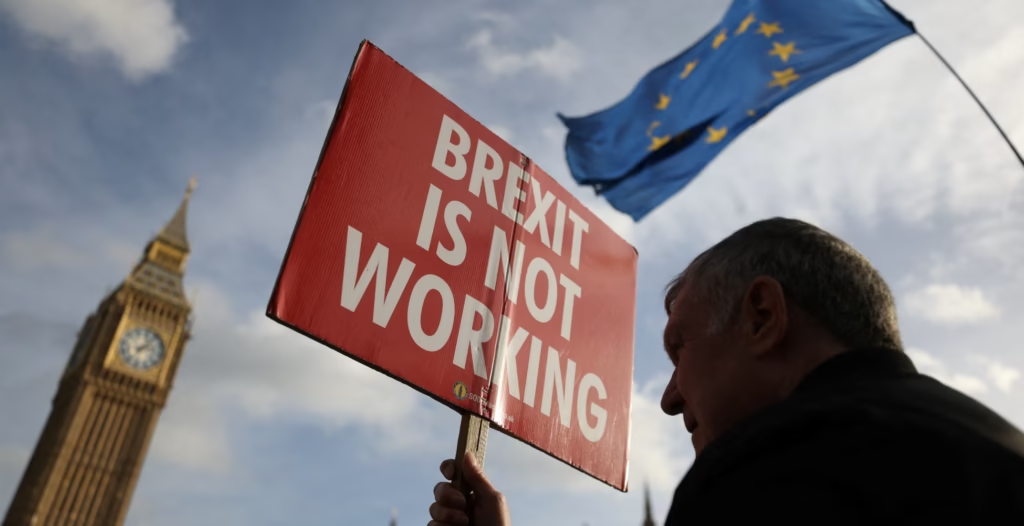
A decade after Britain voted to leave the European Union, frustration over Brexit is growing as the country faces weak economic performance, rising costs, and ongoing political debate about the decision that reshaped its future.
The vote in 2016 was sold as a turning point that would give the United Kingdom full control over its laws, borders, and trade policy. Supporters promised faster growth, stronger industries, and new global opportunities. But 10 years later, many business leaders and economists say the results have fallen short of expectations.
The United Kingdom left the EU single market and customs system after years of negotiation, officially completing the process on January 31, 2020. Since then, trade with the 27 member states has become more complex, with new paperwork, checks, and delays increasing costs for many companies.
Businesses that depend on exports have felt the pressure. Simon Boyd, managing director of REIDSteel in southern England, says his company still supports the idea of Brexit but believes the outcomes have been disappointing due to political and global challenges.
The company, which employs about 130 people, manufactures prefabricated steel structures and exports to markets including Ghana and Barbados. Boyd says rising costs and slower growth have made trading more difficult than expected.
Industry leaders such as Mike Hawes, head of the Society of Motor Manufacturers and Traders, have also raised concerns. The car industry warned early that Brexit would disrupt supply chains that connect factories across Europe. Many automakers now face higher costs and reduced investment in the UK market.
Economists say the impact is structural and long term. Creon Butler of Chatham House says leaving the European single market has reduced national wealth and productivity. He argues that the country is economically smaller than it would have been if it had remained in the EU system.
Research from international economists also suggests that Brexit has lowered UK economic output. Estimates indicate GDP may be 6% to 8% lower than it would otherwise have been. Investment is also down, along with productivity across several sectors.
Manufacturing has been among the hardest hit areas. The automotive industry, which depends on cross border supply chains, has faced delays and added costs due to new trade rules. Industry leaders say Britain is no longer seen as a simple gateway into the European market.
While Brexit supporters argued that new trade deals would boost the economy, the UK has signed agreements with countries such as Australia, India, and the United States. However, trade with the European Union still dominates. EU countries account for about 41% of UK exports and around half of imports.
Labor shortages have also become a major issue. Before Brexit, the free movement of workers allowed businesses to hire staff from across Europe. That system ended, and some sectors now struggle to find workers.
The hospitality industry has been particularly affected. Many restaurants, including South Asian curry houses across the country, report difficulty hiring skilled staff. Some owners say promised visa flexibility did not fully materialize after Brexit.
Oli Khan of the Bangladesh Caterers Association UK said many in the sector feel let down by the changes. He said businesses expected easier access to overseas workers but instead faced tighter immigration rules.
The political debate continues as the United Kingdom searches for ways to improve growth. Prime Minister Keir Starmer has opened discussions with the European Union to rebuild parts of the trading relationship. The aim is to reduce friction and support economic recovery.
Public opinion also shows growing frustration. A recent survey by Ipsos, the Policy Institute at King’s College London, and UK in a Changing Europe found that 48% of people say Brexit is going worse than expected. Only 9% say it is going better than expected.
In early years after the vote, expectations were high that leaving the EU would transform the economy. Instead, businesses say they have had to adapt to new barriers in trade and labor movement while dealing with global shocks such as the COVID 19 pandemic and geopolitical conflicts.
The debate over Brexit continues to divide opinion. Supporters argue the UK has regained sovereignty and freedom in trade policy. Critics say the economic costs have outweighed the benefits and slowed long term growth.
As Britain marks a decade since the referendum, the conversation has shifted from promises to performance. With economic pressures still visible, many now question whether the country can fully recover from the disruption caused by leaving the European Union.