
Britain Political Leadership Faces Fresh US Criticism
US Vice President JD Vance has said Britain has been “failed by its leadership for a long time” and expressed hope that the country’s next prime minister will deliver the major changes many voters are seeking. His comments come as the United Kingdom prepares for another change in leadership following Prime Minister Keir Starmer’s decision
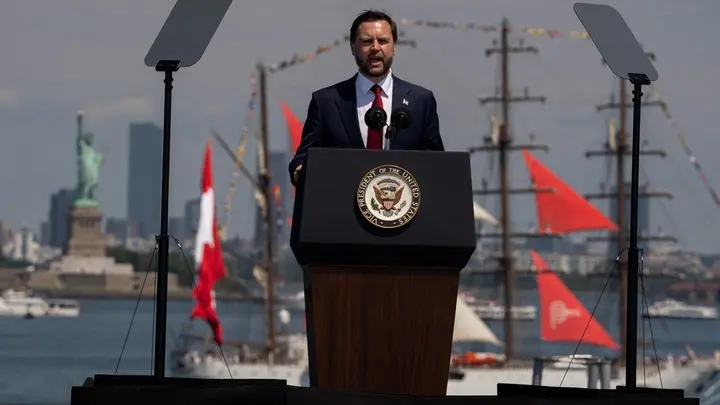
US Vice President JD Vance has said Britain has been "failed by its leadership for a long time" and expressed hope that the country's next prime minister will deliver the major changes many voters are seeking. His comments come as the United Kingdom prepares for another change in leadership following Prime Minister Keir Starmer's decision to step down.
In an interview published on Sunday, Vance said the frequent change of prime ministers in recent years shows that deeper problems exist within British politics. He argued that the country needs meaningful structural reform to restore stability and public confidence.
Britain has experienced significant political turnover over the past decade. According to Vance, having six prime ministers in only a few years reflects a political system that many voters believe is no longer meeting their expectations.
He said the repeated leadership changes suggest that people are looking for lasting solutions rather than short-term political adjustments. Vance added that he hopes the next prime minister can guide the country in a new direction and address the challenges facing the nation.
Prime Minister Keir Starmer announced last month that he plans to step down after serving for two years. His departure will open the way for Britain to appoint its seventh prime minister in about a decade, continuing a period of political change that has attracted international attention.
Andy Burnham is widely expected to become Britain's next prime minister after emerging as the only candidate to replace Starmer. Vance said he hopes Burnham, or whoever ultimately takes office, will be able to deliver the structural reforms that many British voters have been demanding.
He said the most important goal is for Britain's next leader to help put the country back on a stable path. While discussing British politics, Vance emphasized that the focus should remain on improving long-term governance and public confidence.
Despite his criticism of Britain's political leadership, Vance spoke positively about the country itself. He described Britain as an "amazing place" and praised its people. He also noted his personal connection through his wife, Usha Vance, who studied at the University of Cambridge.
The vice president's comments come during a period of continued cooperation between the United States and the United Kingdom. Although the two countries have disagreed on several international issues in recent years, they have continued to work closely on trade, investment, defence, and security matters.
The relationship between former Prime Minister Keir Starmer and US President Donald Trump was at times marked by policy differences, including discussions about Iran, Gaza, Ukraine, immigration, and energy. Even with those disagreements, both governments continued to describe the US-UK partnership as a special relationship built on shared strategic interests.
Following Starmer's resignation announcement, President Trump described him as a "lovely man" and said they had developed a friendly relationship. At the same time, Trump criticized Starmer's handling of immigration and energy policy while wishing him well after leaving office.
Trump has also commented on Andy Burnham, describing him as politically liberal and suggesting that Britain's future government may be less supportive of expanding oil and gas production in the North Sea. Energy policy is expected to remain one of the key issues facing the next British administration.
Vance said he does not know Burnham well but stressed that the United States will continue working closely with whichever leader becomes Britain's next prime minister. He said the long-standing partnership between Washington and London remains important regardless of political leadership.
As Britain prepares for another leadership transition, attention is turning toward how the next government will respond to economic challenges, public services, energy policy, and international relations. Vance's remarks highlight growing international interest in the direction of British politics as the country enters another period of political change.