England Social Care Crisis Talks Begin Across Parties
Prime Minister Andy Burnham has called on political rivals to work together to tackle England’s long-running social care crisis, arguing that the issue can no longer be delayed as pressure grows on families, carers, and the National Health Service. Burnham is set to host a summit at Downing Street on Wednesday with Conservative leader Kemi
Prime Minister Andy Burnham has called on political rivals to work together to tackle England’s long-running social care crisis, arguing that the issue can no longer be delayed as pressure grows on families, carers, and the National Health Service.
Burnham is set to host a summit at Downing Street on Wednesday with Conservative leader Kemi Badenoch and Liberal Democrat leader Sir Ed Davey. The meeting aims to begin discussions on a long-term plan for social care reform and prevent further strain on the NHS.
Ahead of the summit, Burnham said the country needs a different style of politics focused on solving problems rather than scoring political points. He argued that social care has been neglected for decades because governments viewed the challenge as too difficult and politically risky.
The prime minister said leaders from different parties may disagree on many issues, but he believes there is enough common ground to find solutions for the care system. He stressed that carers, families, and patients are paying the price for years of inaction.
Burnham warned that continuing to delay reform would leave more families struggling with care costs while increasing pressure on hospitals and healthcare services. He said the country now faces a choice between passing the problem to future generations or addressing it directly.
The initiative comes at a time when questions are growing over the government’s finances. Burnham has already announced several expensive policy commitments, including plans to remove VAT on energy bills, maintain a £2 cap on bus fares, and reduce business rates for pubs and clubs by 20 percent.
Economic concerns have added to the debate over how future social care reforms would be funded. Analysts have warned that inflation could approach 4 percent next year while government borrowing capacity remains limited. This has increased speculation that any major new spending plans may require tax increases, spending cuts, or other funding measures.
Defence spending is also expected to place pressure on public finances. Estimates suggest the government may need to find billions of pounds to meet future defence commitments, creating further challenges for the Treasury.
Despite concerns over costs, both major opposition parties have indicated a willingness to participate in discussions. Sir Ed Davey has long called for action on social care and said his party is prepared to work with the government on reforms.
Badenoch has also signaled support for discussions but warned that the Conservatives would not back tax increases as a way to fund any new care system.
The issue has a long political history for Burnham. During his time as health secretary in 2009, he proposed a plan involving a levy on assets after death to help pay for care services. The proposal faced strong opposition and was criticized by political opponents at the time. Government officials have now rejected claims that the current discussions involve reviving that proposal.
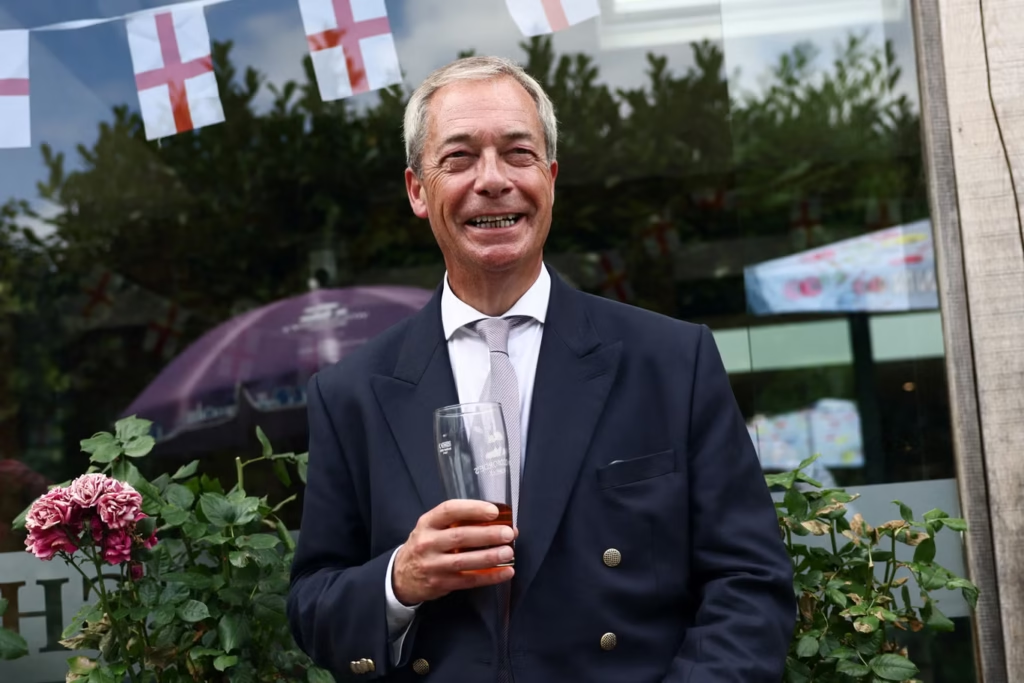
One notable absence from the summit is Reform UK. The party, led by Nigel Farage, has not been invited to participate in the talks despite its strong polling performance over the past year. Reform has already criticized the initiative and accused Burnham of revisiting old policy ideas, allegations that Downing Street has denied.
Burnham said the summit represents an effort to rebuild confidence that difficult national problems can still be solved through cooperation. He argued that people deserve a care system that provides dignity, security, and reliable support when they need it most.
The prime minister is expected to reinforce that message during a visit to a care home in north London. There, he will call for parties to set aside differences and focus on practical solutions for a system that many experts believe is under severe strain.
Joining the discussions will be Health Secretary Yvette Cooper and Baroness Louise Casey, who is leading the Independent Commission on Adult Social Care. The commission is preparing recommendations that could help shape a future National Care Service.
Baroness Casey is also launching the Big Conversation on Care, a public consultation designed to gather views from people across England. Through a new online platform, members of the public will be invited to share opinions on the values and principles they believe should guide the future care system.
Casey said repeated cycles of reviews and promises have failed to deliver lasting change. She argued that fixing social care requires an honest national discussion about fairness, funding, and the support people need as they age. She said meaningful reform can only happen if government, political parties, and the public work together to address the challenge once and for all.