
Tesla Shares Extend Losing Streak as Catalysts Fade
Tesla shares have extended their losing streak to eight consecutive weeks, deepening a weak start to 2026 as investors wait for fresh catalysts to restore momentum. The stock continues to underperform broader market benchmarks ahead of key earnings later this month. According to Britain Chronicle analysis, the sustained decline reflects growing investor uncertainty over Tesla’s
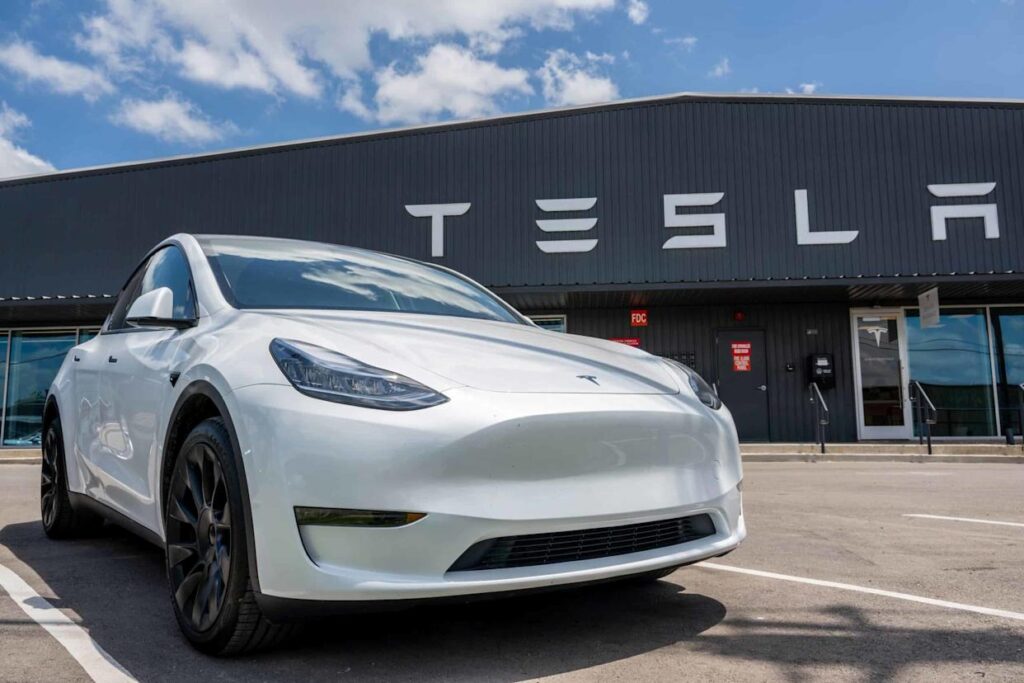
Tesla shares have extended their losing streak to eight consecutive weeks, deepening a weak start to 2026 as investors wait for fresh catalysts to restore momentum. The stock continues to underperform broader market benchmarks ahead of key earnings later this month.
According to Britain Chronicle analysis, the sustained decline reflects growing investor uncertainty over Tesla’s short-term growth drivers, particularly as expectations shift from hype-driven innovation to measurable commercial performance.
The downturn comes at a sensitive moment for the electric vehicle maker, with markets increasingly focused on profitability, product delivery timelines, and the pace of its artificial intelligence ambitions.
What Happened?
Tesla shares fell 3.2% for the week, marking the eighth straight weekly decline. Although the stock saw a modest rebound in early trading, overall momentum remains negative.
The company’s shares are down 22.4% year-to-date, significantly underperforming the broader S&P 500, which has remained broadly flat over the same period.
Investors are now turning attention toward Tesla’s upcoming first-quarter earnings report, expected later this month on April 22, for signs of operational clarity and forward guidance.
Recent market sentiment has been shaped by uncertainty around Tesla’s product roadmap. While the company has highlighted long-term bets on robotics and autonomy, concrete commercial progress remains limited.
CEO Elon Musk has previously pointed to initiatives such as the Optimus humanoid robot and robotaxi services, but investors have seen few confirmed updates or revenue-linked milestones.
Why This Matters
Tesla’s valuation has long been tied not only to car sales but also to expectations around artificial intelligence, robotics, and autonomous driving technology.
However, the absence of near-term catalysts is putting pressure on sentiment, particularly as investors reassess how quickly these long-term projects can translate into revenue.
At the same time, core automotive performance remains crucial. While deliveries showed modest growth in the latest quarter, analysts note that comparisons are complicated by production shifts and model transitions.
The lack of clarity around new product launches, including potential lower-cost vehicles, adds to uncertainty about demand sustainability in a more competitive EV market.
What Analysts or Officials Are Saying
Market observers say investors are increasingly focused on execution rather than ambition. While Tesla’s innovation pipeline remains central to its valuation narrative, confidence depends on visible progress.
Reports suggest the company is exploring development of a more affordable electric SUV, though the project remains in early stages with no confirmed production timeline.
Meanwhile, Tesla’s robotaxi program continues limited operations in select US cities, but services still rely on safety drivers, contrasting with more autonomous systems deployed by competitors such as Alphabet’s Waymo.
Analysts also point out that Tesla’s high forward price-to-earnings ratio reflects expectations of future growth, making the stock particularly sensitive to delays or missed milestones.
Britain Chronicle Analysis
Tesla’s extended decline highlights a broader transition in how markets value high-growth technology companies. Narrative-driven momentum is giving way to stricter scrutiny of execution timelines and revenue visibility.
The company now faces a dual challenge: sustaining its core automotive business while proving that its AI and robotics initiatives are commercially viable in the near term.
Investor patience is being tested as promised breakthroughs in autonomy and robotics remain largely developmental rather than revenue-generating.
This creates a valuation gap risk, where expectations embedded in the stock price outpace near-term delivery. In such conditions, even incremental delays or vague updates can weigh heavily on sentiment.
The upcoming earnings report will therefore serve as a critical test of credibility, not just financial performance.
What Happens Next
All attention now turns to Tesla’s April 22 earnings report, where investors will look for guidance on vehicle demand, margins, and future product plans.
Updates on robotics, autonomous driving, and potential new vehicle segments could act as key sentiment drivers if they include concrete timelines or measurable progress.
If clarity remains limited, volatility may persist, especially given the stock’s recent underperformance relative to broader markets.
For now, Tesla remains in a phase where expectations are high but tangible near-term catalysts are in short supply, leaving sentiment highly sensitive to any new developments.
High-Speed Robot Palletizers Revolutionize Industrial Efficiency
European Flight Cancellations Mount: What Travelers Need to Know

Blue Origin New Glenn Reuse: Milestone Achieved, Payload Lost
European Travel Fuel Crisis: Summer Vacations Under Threat

Vodafone Incentivized Staff for Franchisee Fines, Lawsuit Alleges

Europe Faces Renewed Fuel Price Protests Amid Energy Rise