UK Muslim Integration Poll Reveals Public Divide
A new survey has found that many people in Britain believe the country is becoming more divided over national identity, immigration, and social cohesion. The findings come from a report examining public attitudes toward democracy, trust in institutions, and extremism across the United Kingdom. The survey found that 42 percent of respondents believe Muslims cannot
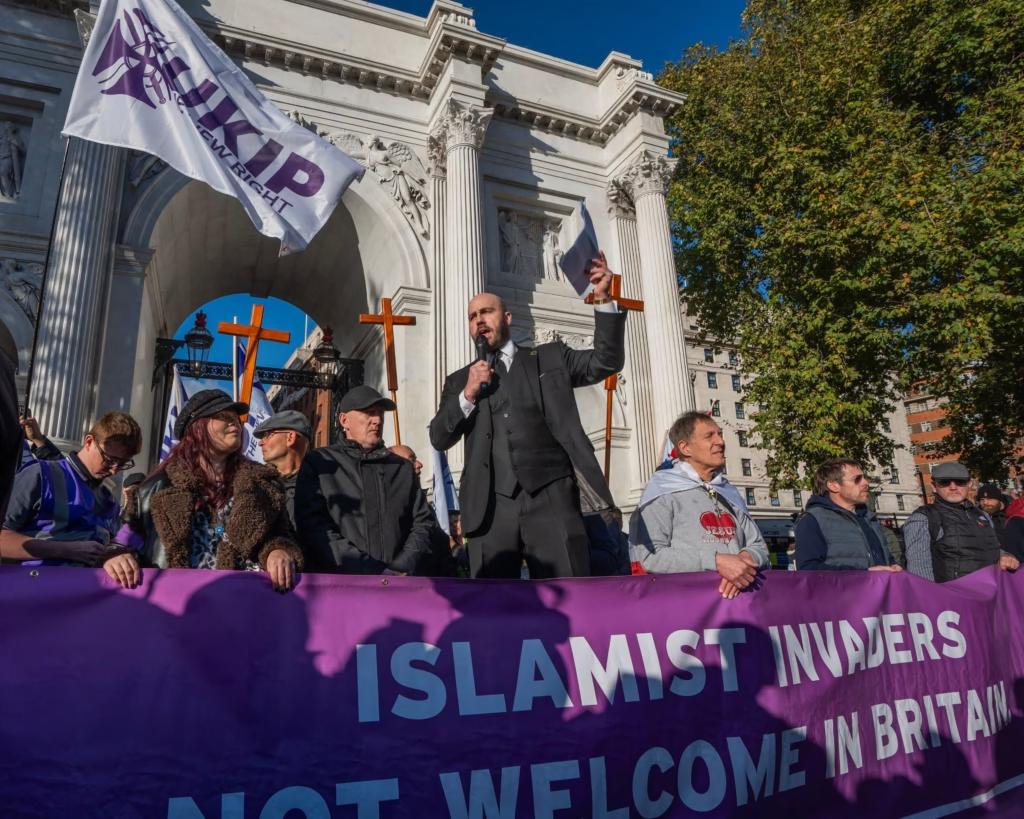
A new survey has found that many people in Britain believe the country is becoming more divided over national identity, immigration, and social cohesion. The findings come from a report examining public attitudes toward democracy, trust in institutions, and extremism across the United Kingdom.
The survey found that 42 percent of respondents believe Muslims cannot fully integrate into British society. At the same time, 55 percent said they think Britain's national identity is fading because of increasing diversity. Researchers said these views reflect growing concerns about social change and public confidence.
The report was led by former UK counter-extremism commissioner Sara Khan and was based on polling of 4,094 adults conducted this spring. Khan said the findings point to a deeper decline in trust rather than a temporary shift in public opinion. She warned that confidence in public institutions has weakened over time and called for action to strengthen social cohesion.
According to the survey, 61 percent of respondents believe the country's traditional social contract has broken down. Nearly three in ten people also said citizens should ignore rules or institutions if they believe those systems prevent needed change.
The report found that views on British identity remain sharply divided. About 31 percent of those surveyed said they were open to the idea that non-white people could never be as British as white people. Researchers said these opinions are no longer limited to small groups but are becoming more visible in public debate.
The study also examined attitudes among British Muslims. It found that 85 percent support integration into British society, while 88 percent said they mix comfortably with people from other faiths. Another 85 percent said they feel free to practice their religion in the United Kingdom.
However, the survey also found high levels of mistrust among some Muslim respondents. Around 64 percent said they believe white people are working against Muslims, while 56 percent expressed the same view about Jewish people. The report also found that 27 percent of Muslim respondents believed the Holocaust had been invented or exaggerated, a finding researchers described as deeply concerning.
Researchers recorded 1,784 offline events linked to far-right groups and 225 events connected to Islamist activity during the 12-month period covered by the report. The authors said extremist groups continue to exploit public frustration and social divisions, while hostile foreign actors also seek to increase tensions through misinformation and online influence campaigns.
The report also examined public attitudes toward political violence. While 80 percent of respondents said violence is never acceptable in politics, nearly 29 percent of adults aged between 18 and 34 said they believed political violence could sometimes be justified.
Community organizations said the findings highlight the need for stronger efforts to improve trust and reduce social tensions. They warned that growing support for ideas such as remigration and increasing hostility between communities could create further challenges if left unaddressed.
The report concludes that rebuilding trust in democratic institutions and encouraging dialogue between communities will be essential to strengthening social cohesion. Researchers said governments, public institutions, and community leaders will need to work together to address rising polarization and prevent extremist narratives from gaining wider public support.