
Good Golly Miss Molly! Revives Working-Class Struggle
The revival of Good Golly Miss Molly! brings Bob Eaton’s music-driven theatre piece back to the stage, blending rock’n’roll energy with a story of working-class resistance and community identity in northern England. According to Britain Chronicle analysis, the production succeeds most when it leans into its musical storytelling, using rhythm and performance to carry the
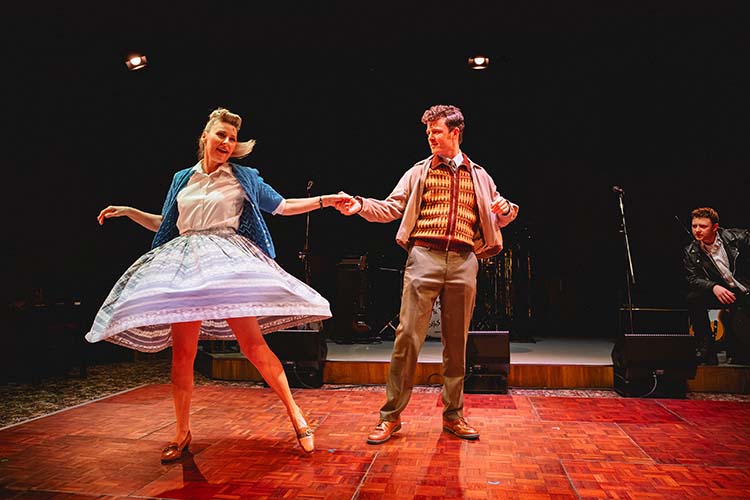
The revival of Good Golly Miss Molly! brings Bob Eaton’s music-driven theatre piece back to the stage, blending rock’n’roll energy with a story of working-class resistance and community identity in northern England.
According to Britain Chronicle analysis, the production succeeds most when it leans into its musical storytelling, using rhythm and performance to carry the emotional weight of a largely historical social conflict.
First staged in 1989, the play revisits a community fight over housing demolition plans in Tunstall, reframing local political struggle through the language of live music and collective performance.
What Happened?
The stage production Good Golly Miss Molly! has returned in a revival directed in the spirit of Bob Eaton’s original 1989 concept, which fused actor-musician performance with community-centred storytelling.
Set in Hawes Street, Tunstall, the narrative follows residents who resist council-led demolition plans under a slum clearance programme, instead pushing for housing improvements that preserve their community.
The production uses rock’n’roll music as a narrative structure, with characters forming and reforming a band that reflects both social unity and personal transformation.
At the centre of the story is Molly, portrayed as a figure who evolves from schoolgirl to community leader, symbolising both personal empowerment and collective resistance.
The staging incorporates live instrumentation, harmonies, and ensemble movement, creating a performance style where music and drama are tightly interwoven rather than separate elements.
Why This Matters
The revival highlights how British theatre continues to revisit industrial-era and post-industrial community struggles through musical storytelling.
It also reflects a broader trend in stage productions that combine live performance and social history, making political themes more accessible through entertainment formats.
The story’s focus on housing, identity, and local decision-making resonates with ongoing debates in the UK around urban redevelopment and community displacement.
By using rock’n’roll as its emotional engine, the production connects historical struggle with cultural memory, particularly for audiences familiar with working-class musical traditions.
What Analysts or Officials Are Saying
The production has been praised for its energetic ensemble work and its ability to integrate music into storytelling without breaking narrative flow.
However, some commentary suggests that the political conflict at the centre of the story is only lightly sketched, leaving limited detail about the scale of the residents’ struggle or the institutional pressures they face.
The sympathetic portrayal of local authorities provides balance but also softens the sharpness of the underlying conflict, according to theatre observers.
Despite this, the musical execution is widely seen as the production’s strongest asset, with live performance creating a sense of immediacy and audience engagement.
Britain Chronicle Analysis
Good Golly Miss Molly! works best as a piece of cultural memory rather than a detailed political reconstruction. Its strength lies in how it transforms local history into shared emotional experience through music.
The production demonstrates how theatre can prioritise feeling over documentation, using rhythm and performance to communicate what written detail sometimes cannot.
At the same time, the limited exploration of structural conflict weakens its political depth, leaving audiences to infer rather than fully understand the stakes involved.
This balance between entertainment and social commentary is deliberate, but it raises questions about how far musical theatre should go in explaining real-world political tensions.
Even so, the revival reinforces the enduring appeal of people-powered storytelling on stage, where community identity becomes both subject and soundtrack.
What Happens Next
The production is expected to continue drawing audiences interested in socially engaged theatre with a musical edge.
Future revivals or reinterpretations may choose to deepen the political context or further expand the musical framework, depending on audience response.
For now, Good Golly Miss Molly! stands as a reminder of how British theatre continues to reimagine working-class history through performance, music and collective memory.
£30M Boost for London Cultural Venues & Arts Access

Findhorn to Host Indigenous Voices Dance Festival May 29-31

EU Culture Street 2026 opens in Hangzhou China
Kasashima Gallery Sets 2026 Global Exhibition Roadmap
EU Launches Cultural Training Lab for Ukrainian Creators
Spanish Film ‘Deaf’ Wins EU Parliament LUX Prize 2026