
UK social media ban divides parents and children
A strong debate is growing in the United Kingdom over a possible under-16 social media ban. While most parents support the idea, children and teenagers affected by the proposal have mixed opinions. The issue is now part of a government consultation on online safety rules, with a decision expected soon. Recent surveys suggest that around
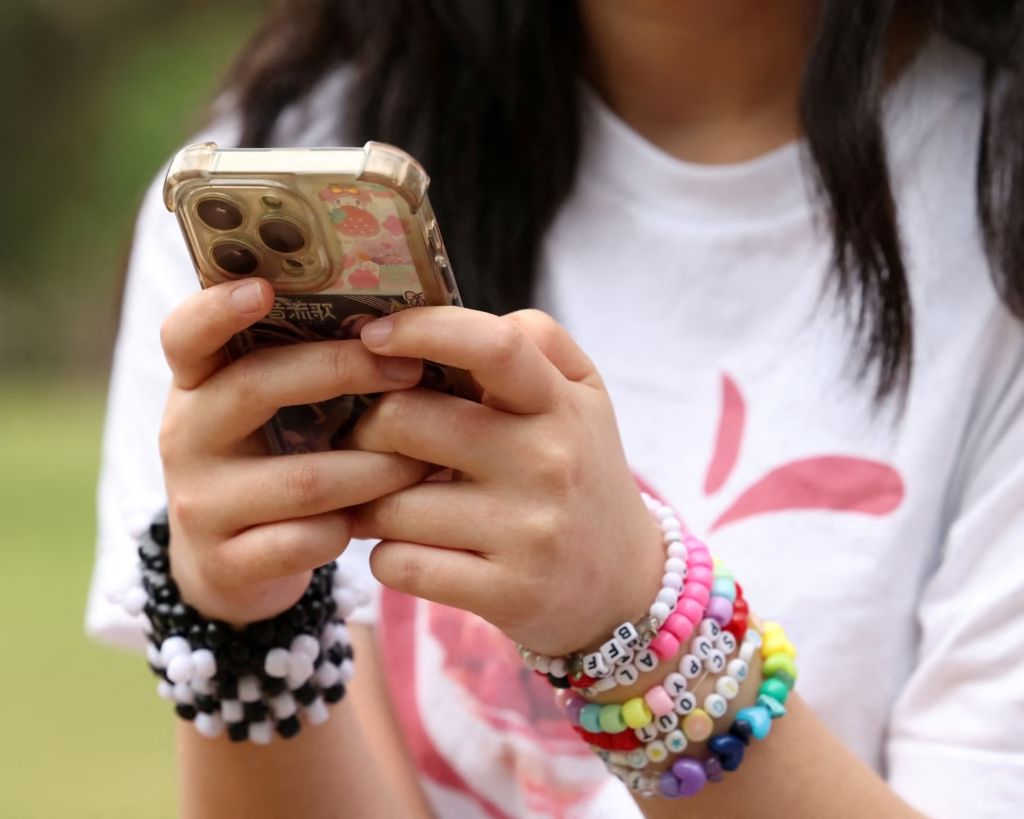
A strong debate is growing in the United Kingdom over a possible under-16 social media ban. While most parents support the idea, children and teenagers affected by the proposal have mixed opinions. The issue is now part of a government consultation on online safety rules, with a decision expected soon.
Recent surveys suggest that around nine in ten parents in the UK support banning social media use for children under 16. Many believe it could protect young people from harmful content, reduce screen time, and improve mental health.
However, views among children are more divided. A group of 10 preteens and teenagers in west London shared a wide range of opinions, from full support for strict limits to strong opposition against a complete ban.
The UK government is currently reviewing options for online safety. These include age limits for “high-risk” platforms, restrictions on features like livestreaming, and controls on algorithms that recommend personalised content. Officials are also considering screen time limits and reduced access to features such as autoplay and infinite scrolling.
One 13-year-old participant, Precisa, uses TikTok and Instagram mainly to promote her small deodorant business. She also serves as deputy youth mayor in her local borough. She said social media is important for communication and public work. However, she does not support a full ban.
Instead, she prefers stronger monitoring and tighter rules on harmful content. She believes some platforms still allow inappropriate material and need better control rather than a total shutdown for teens.
Another teenager, Zoe, aged 14, uses Snapchat and WhatsApp but is restricted from other platforms by her parents. She does not support a ban, saying parental controls are enough for safety. However, she raised concerns about personalised algorithms, calling them an “invasion of privacy.”
For younger children in the group, YouTube remains the most popular platform. Many use it for music, football highlights, and educational videos. However, most said they do not like YouTube Kids, describing it as too limited and repetitive.
Sophia, 12, said she would miss YouTube if access was restricted, as she enjoys art and music content. Another 12-year-old, Milei, also said a full ban would be too strict and that rules should be balanced.
Accurisa, also 12, supported removing unsafe content but said she would likely try to join social media when she is older. She also mentioned that older friends would influence her decision to join platforms like TikTok later.
Kit, 12, took a different view and supported a full ban similar to Australia’s model. He said social media can become addictive and may affect mental health and friendships. His brother Xander, 14, disagreed and said social media also has educational benefits and helps communication.
Xander added that parents should play a bigger role in managing children’s online use instead of relying on government bans. He also warned that strict rules could lead children to try to bypass restrictions, as seen in other countries.
Another teenager, Andrew, 13, supported time limits rather than a full ban. He suggested banning social media during weekdays and limiting use to one hour on weekends to help with schoolwork and focus.
Some children also supported partial restrictions, saying certain platforms are more harmful than others. One participant said children should still be allowed to use “safe” apps while more dangerous ones face tighter controls.
The debate is part of a wider government review on how to protect children online. Officials are considering banning harmful apps for under-16s while allowing safer platforms with restrictions on features like messaging strangers.
Experts have also raised concerns about a “cliff edge” effect, where children suddenly face unsafe content when moving from restricted apps to open platforms without gradual transition.
Parent advocate Nino Dvalidze, who helped organise the discussion, said the goal should not be to create fear around technology. Instead, she said children should be taught how to use digital tools safely and responsibly.
As the consultation continues, the divide between parental concern and children’s digital habits remains clear. While adults push for stricter protection, many young users argue for balance, education, and smarter regulation rather than a full ban.