
Blue Origin New Glenn Reuse: Milestone Achieved, Payload Lost
Blue Origin’s New Glenn rocket achieved a significant milestone on Sunday, April 19, completing its third flight with the first-ever reuse of a first-stage booster. The NG-3 mission, carrying the BlueBird 7 satellite, launched from Cape Canaveral. The previously flown first stage successfully separated and landed precisely on the droneship “Jacklyn” in the Atlantic. This
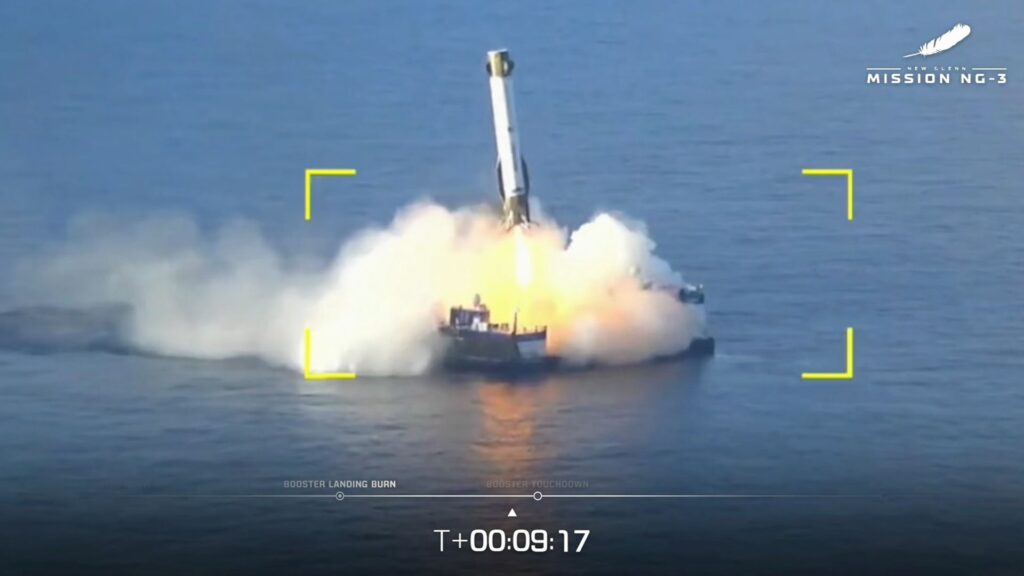
Blue Origin's New Glenn rocket achieved a significant milestone on Sunday, April 19, completing its third flight with the first-ever reuse of a first-stage booster. The NG-3 mission, carrying the BlueBird 7 satellite, launched from Cape Canaveral. The previously flown first stage successfully separated and landed precisely on the droneship "Jacklyn" in the Atlantic. This crucial step demonstrates Blue Origin's progress towards developing fully reusable launch systems, a key capability for future space exploration and commercial competitiveness. This success underscores the path toward New Glenn's design goal of 25 flights per first stage, aiming to reduce launch costs and increase flight frequency.
Despite the reusability success, the NG-3 mission faced a substantial setback concerning its primary payload, the massive BlueBird 7 satellite. Intended for AST SpaceMobile's direct-to-cellphone internet constellation, BlueBird 7, featuring an expansive 2,400 square-foot antenna, was confirmed to have separated and powered on. However, it was placed into an "off-nominal orbit." Assessment by AST SpaceMobile revealed the altitude was too low for sustained operations using its on-board thruster technology. Consequently, BlueBird 7 will be de-orbited, a disappointing outcome for the mission's commercial objective, though its cost is expected to be recovered through insurance.
This mixed outcome highlights the dynamic challenges and critical advancements within the private space sector. Blue Origin's pursuit of first-stage reusability is central to its strategy to compete with SpaceX, the current leader in proven orbital reusability with its Falcon 9 and Starship rockets. New Glenn, an imposing 322 feet tall, rivals NASA's Space Launch System in size. Its first stage is propelled by seven BE-4 engines, utilizing liquid oxygen and liquid methane (methalox) fuel—a similar propellant choice to SpaceX's Starship. Both companies are actively striving to prove the reliability and cost-effectiveness of their next-generation reusable launch systems.
The performance of New Glenn is particularly critical for Blue Origin's involvement in NASA's Artemis program. The rocket is designated to launch the company's Blue Moon lunar lander, one of two commercial vehicles selected to transport astronauts to the moon. Blue Origin anticipates launching the uncrewed Mark 1 Blue Moon lander by the end of this summer, following recent environmental testing. However, the "off-nominal orbit" issue with BlueBird 7 could potentially complicate this ambitious timeline. With ongoing development delays for both Blue Origin's Blue Moon and SpaceX's Starship, and recent Artemis architecture adjustments, the readiness of these lunar landers is under intense scrutiny for crewed missions projected around mid-2027.
High-Speed Robot Palletizers Revolutionize Industrial Efficiency
European Flight Cancellations Mount: What Travelers Need to Know

European Travel Fuel Crisis: Summer Vacations Under Threat

Vodafone Incentivized Staff for Franchisee Fines, Lawsuit Alleges

Europe Faces Renewed Fuel Price Protests Amid Energy Rise

Rising European Bond Yields Deepen Fiscal Pressure