
High-Speed Robot Palletizers Revolutionize Industrial Efficiency
The industrial landscape is undergoing a significant transformation, driven by the relentless pursuit of efficiency and productivity. At the forefront of this evolution are high-speed robot palletizer systems, advanced automated solutions designed to streamline the critical process of stacking products onto pallets. These sophisticated machines are rapidly replacing traditional, labor-intensive manual methods, offering industries a
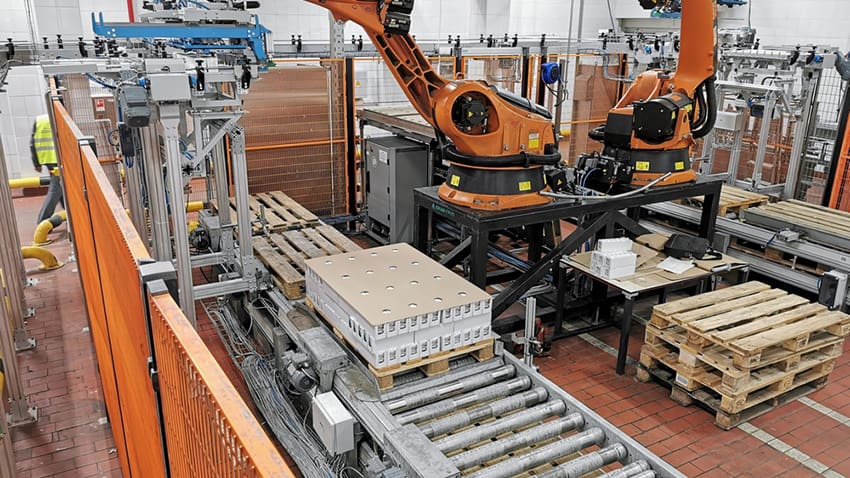
The industrial landscape is undergoing a significant transformation, driven by the relentless pursuit of efficiency and productivity. At the forefront of this evolution are high-speed robot palletizer systems, advanced automated solutions designed to streamline the critical process of stacking products onto pallets. These sophisticated machines are rapidly replacing traditional, labor-intensive manual methods, offering industries a powerful tool to enhance throughput, maintain impeccable precision, and ensure consistent output in demanding production environments. Their rise signifies a pivotal moment in manufacturing and logistics, marking a clear departure from outdated practices towards a future defined by intelligent automation.
What sets high-speed robot palletizers apart is their innovative engineering. Unlike conventional systems, these variants integrate optimized conveyor networks, advanced gripping mechanisms, and seamlessly synchronized robotic operations. This allows them to manage thousands of units per hour, making them indispensable for sectors grappling with immense production volumes. Key features include intelligent material flow, where products are accurately positioned for robotic handling, guaranteeing uninterrupted operation. Furthermore, programmable stacking patterns offer unparalleled flexibility in product arrangement, while user-friendly interfaces empower operators to easily monitor performance, adjust parameters, and address issues, significantly contributing to reduced downtime and enhanced long-term operational reliability.
The operational advantages of adopting high-speed robot palletizers are profound and multifaceted. Foremost, they dramatically boost productivity by automating repetitive tasks, ensuring a consistent pace throughout the production cycle, enabling businesses to meet high market demands without compromising efficiency. Crucially, they also elevate workplace safety; by entrusting heavy lifting and repetitive motions to automated systems, companies mitigate physical strain and injury risks for human workers. Financially, while the initial investment may appear substantial, the subsequent reduction in labor costs, minimized errors, and decreased product damage translate into considerable long-term savings. Optimized energy consumption in modern designs further contributes to controlling ongoing operational expenditures.
High-speed robot palletizers are already widely deployed across diverse sectors, including food processing, pharmaceuticals, chemicals, agriculture, and logistics, where efficient handling of bulk or packaged goods is paramount. They ensure products are impeccably organized for transit in manufacturing, curbing damage risks, and facilitate faster loading and unloading in warehousing, thereby enhancing overall supply chain efficiency. As industries continue to evolve, the escalating demand for faster, smarter, and more adaptive palletizing solutions is inevitable. Future advancements in robotics, artificial intelligence, and sensor technology promise even more sophisticated systems, capable of navigating varied product types and intricate stacking requirements, solidifying high-speed robot palletizers as a cornerstone in the journey towards fully automated, accurate, and scalable production lines.
European Flight Cancellations Mount: What Travelers Need to Know

Blue Origin New Glenn Reuse: Milestone Achieved, Payload Lost

European Travel Fuel Crisis: Summer Vacations Under Threat

Vodafone Incentivized Staff for Franchisee Fines, Lawsuit Alleges

Europe Faces Renewed Fuel Price Protests Amid Energy Rise

Rising European Bond Yields Deepen Fiscal Pressure