
Britain Nationalises British Steel To Save Jobs
The United Kingdom has officially brought British Steel into public ownership, completing the nationalisation of the company in a move aimed at protecting the country’s steel industry, preserving thousands of jobs, and securing a key part of Britain’s industrial economy. The government announced the takeover on Thursday, saying the decision was made to safeguard the
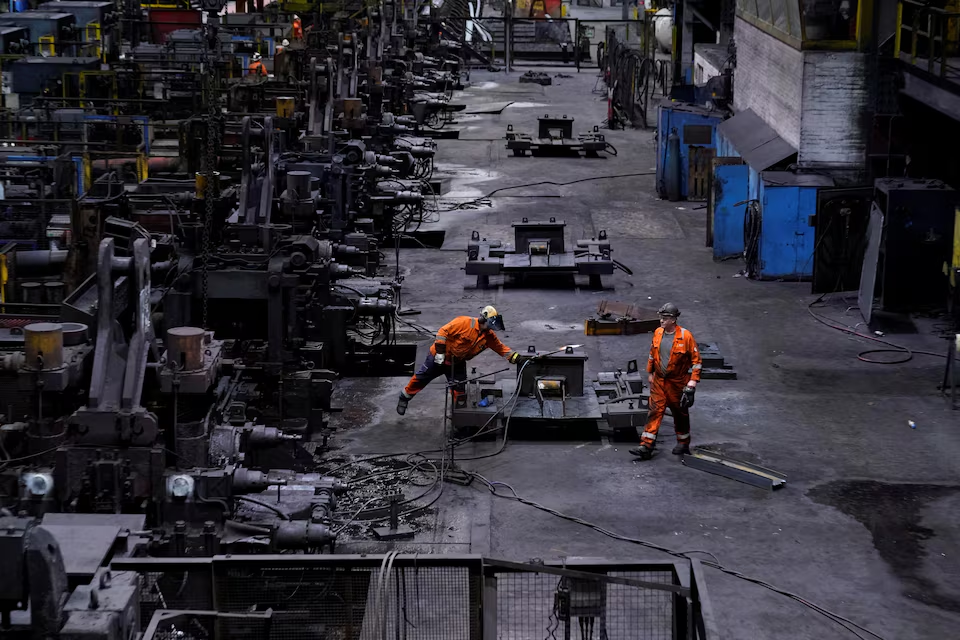
The United Kingdom has officially brought British Steel into public ownership, completing the nationalisation of the company in a move aimed at protecting the country's steel industry, preserving thousands of jobs, and securing a key part of Britain's industrial economy.
The government announced the takeover on Thursday, saying the decision was made to safeguard the national interest and ensure that primary steel production continues in the UK. The move completes the transfer of ownership from Chinese company Jingye to the British government.
Officials said the action was necessary to protect one of the country's most important manufacturing industries. British Steel operates the Scunthorpe steelworks in northern England, the UK's last remaining primary steelmaking site.
Outgoing Prime Minister Keir Starmer said the company has long played an important role in Britain's industrial history. He described British Steel as a cornerstone of the country's manufacturing strength and said the decision would secure the future of domestic steel production.
Starmer also said the takeover would protect skilled jobs and preserve a strategic national capability that supports several major industries across the country.
The government first took operational control of British Steel in April 2025 after concerns grew that the Scunthorpe plant could close under its previous owners. Officials said the intervention helped protect approximately 2,700 jobs at the facility, along with thousands of additional positions throughout the wider supply chain.
The Scunthorpe plant produces steel used in several important sectors, including railway infrastructure, construction projects, and the automotive industry. Because it is the UK's only remaining site capable of producing primary steel, many industry experts consider it a critical national asset.
In recent years, British Steel has faced significant financial challenges. Rising energy prices in the United Kingdom have increased production costs, while global oversupply has placed additional pressure on steel prices and profitability. These market conditions made it increasingly difficult for the company to compete internationally.
The government spent several months exploring options to keep the company operating under private ownership. However, after failing to secure a new buyer, officials announced plans in May to introduce legislation allowing full public ownership of the business.
The nationalisation now gives the government direct responsibility for the future of the company. Ministers say the goal is not only to maintain production but also to modernize operations and build a stronger, more competitive steel industry.
As part of the transition, the government has appointed a new leadership team to oversee British Steel. The management group will focus on stabilizing day-to-day operations while ensuring high standards of workplace safety and maintaining production at the Scunthorpe site.
Officials also said the new leadership will work closely with employees, trade unions, and company management to develop a long-term business strategy. That strategy is expected to improve commercial performance while supporting the transition to lower-carbon steel production.
The government has emphasized that environmental sustainability will remain an important part of British Steel's future. Investments in cleaner manufacturing technologies are expected to help the company reduce emissions while remaining competitive in global markets.
Business and Trade Secretary Peter Kyle said the company now belongs to the British people. He added that the government's priority is to secure the future of British Steel by creating a stable, commercially successful, and environmentally responsible business.
Industry analysts say the nationalisation reflects the growing importance many governments are placing on protecting strategic industries such as steelmaking. Domestic steel production is viewed as essential for national infrastructure, manufacturing, transportation, and long-term economic resilience.
The decision also highlights broader efforts to strengthen Britain's industrial base while reducing reliance on imported steel for major public projects and critical infrastructure.
With the takeover now complete, the government's attention will turn to improving British Steel's long-term financial position, supporting employees, and investing in modern production methods. Officials say the aim is to build a sustainable steel industry that can continue supplying British businesses while protecting skilled manufacturing jobs for years to come.