
Britain NATO Arctic Mission Intercepts Russian Plane
Britain has intercepted a Russian military aircraft during an expanded NATO mission in the Arctic region. The operation took place after the Royal Navy deployed the aircraft carrier HMS Prince of Wales to support the alliance’s air defense activities in the Norwegian Sea. The UK Ministry of Defence said the incident happened late last week
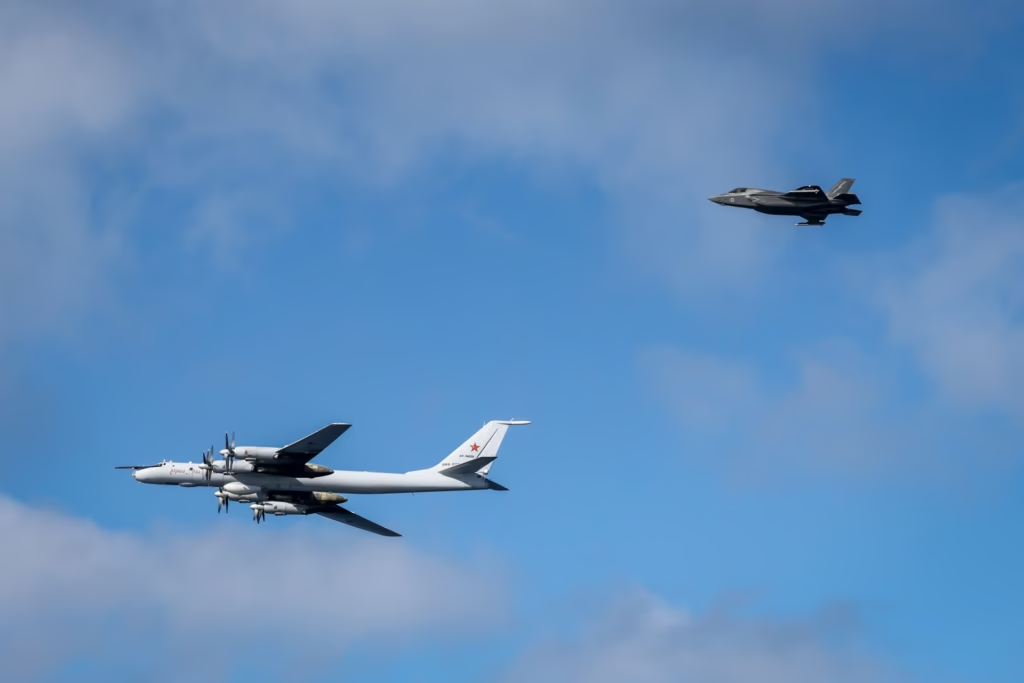
Britain has intercepted a Russian military aircraft during an expanded NATO mission in the Arctic region. The operation took place after the Royal Navy deployed the aircraft carrier HMS Prince of Wales to support the alliance's air defense activities in the Norwegian Sea.
The UK Ministry of Defence said the incident happened late last week when a Russian Bear F maritime patrol aircraft repeatedly approached the British carrier strike group. British officials described the aircraft's actions as unsafe and unprofessional during the encounter.
According to the ministry, the Russian aircraft released a large number of sonobuoys near HMS Prince of Wales. Sonobuoys are floating devices equipped with underwater sensors that help detect and track submarines by listening for sounds beneath the sea.
British officials said the sonobuoys were deployed close to the carrier strike group while it was carrying out NATO operations in the region.
In response, Royal Air Force F-35 fighter jets operating from HMS Prince of Wales were launched on July 2. The fighter aircraft intercepted the Russian patrol plane and escorted it away from the carrier group.
The Ministry of Defence said the action was taken to protect the task force and maintain the security of NATO operations. No further incidents were reported during the interception.
HMS Prince of Wales is one of the United Kingdom's two aircraft carriers. It is currently taking part in NATO activities in northern Europe and is the first European aircraft carrier to conduct NATO air defense operations using F-35 fighter jets.
The deployment reflects NATO's continued focus on strengthening security in the Arctic and North Atlantic regions. Military activity in these areas has increased in recent years as member states seek to improve surveillance, readiness, and cooperation.
The latest mission also marks another important development for the United Kingdom within the alliance. Britain has recently taken command of NATO's Allied Reaction Force, a high-readiness force designed to respond quickly to international crises.
The Ministry of Defence describes the force as a key part of NATO's rapid deployment capability. Units assigned to the force can be sent to operational areas within days when required by the alliance.
Military analysts say the Arctic has become increasingly important because of its strategic location, growing maritime activity, and its role in transatlantic security. NATO members continue to expand joint exercises and patrols in the region as part of broader defense planning.
The interception comes during a period of continued tension between NATO and Russia. Military aircraft from both sides regularly operate in international airspace, and fighter jets are often scrambled to monitor and identify approaching aircraft near alliance operations.
Separately, reports have noted the movement of Russian President Vladimir Putin's luxury yacht along the Norwegian coast as it returns toward Russia.
When asked whether HMS Prince of Wales was monitoring the vessel, UK Defence Minister Dan Jarvis declined to discuss operational details. However, he said British authorities were aware of its location.
Jarvis also suggested that recent developments could reflect increasing pressure on Russia, although he did not provide additional details about the government's assessment.
NATO has continued to strengthen its military presence across northern Europe following changes in the regional security environment. Member countries have increased joint exercises, intelligence sharing, and naval patrols to improve coordination and preparedness.
The Britain NATO Arctic Mission demonstrates the alliance's continued focus on maintaining security in strategically important waters. By deploying advanced naval forces and responding quickly to military activity near its operations, Britain and its NATO partners aim to protect freedom of navigation, monitor regional developments, and reinforce collective defense across the North Atlantic and Arctic regions.