
Britain Oldest Cave Art Discovered In Wales
Archaeologists have confirmed that a series of red markings discovered in a Welsh cave represent the oldest known cave art in Britain, dating back at least 17,100 years. The painted rock art, made up of 10 horizontal red stripes, was found in Bacon Hole cave on the Gower Peninsula in Swansea. Although it was originally
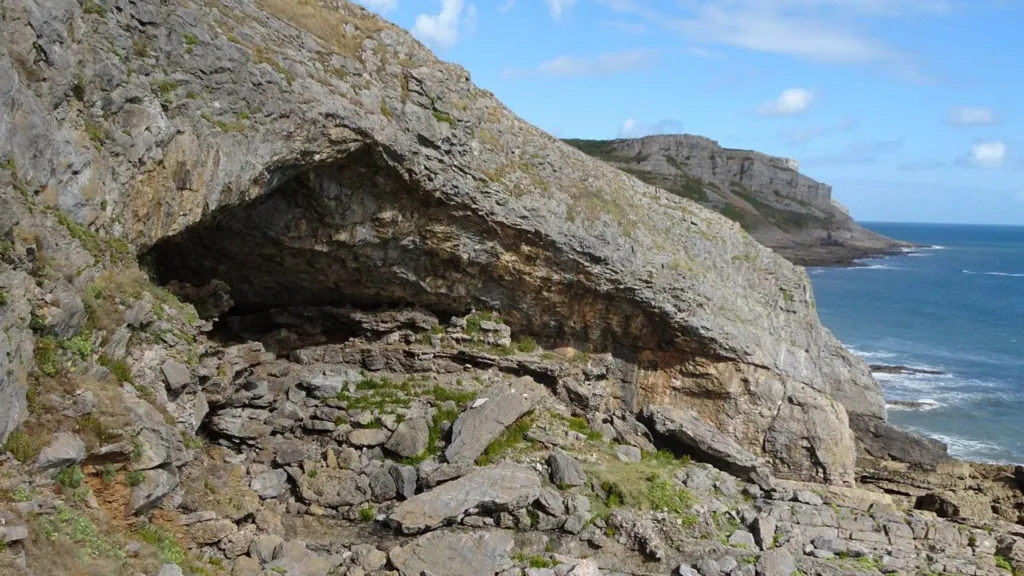
Archaeologists have confirmed that a series of red markings discovered in a Welsh cave represent the oldest known cave art in Britain, dating back at least 17,100 years.
The painted rock art, made up of 10 horizontal red stripes, was found in Bacon Hole cave on the Gower Peninsula in Swansea. Although it was originally discovered in 1912, it was later dismissed as a natural mineral stain and largely forgotten for decades.
Recent scientific analysis has now confirmed that the markings were created by human activity rather than natural processes. Researchers used advanced uranium-thorium dating techniques to examine mineral layers forming over the pigment, allowing them to establish a minimum age for the artwork.
The findings place the art not only as the oldest in Britain, but also among the earliest known examples of cave art in north-western Europe.
Experts believe the markings were created by prehistoric hunter-gatherers living in the region during the late Ice Age period. At that time, the landscape of what is now the Bristol Channel was very different, forming a fertile plain that supported large herds of animals.
Species such as mammoth, bison, horse, elk, and reindeer are believed to have moved across the area, attracting human groups who relied on hunting for survival. Archaeologists say this environment made the Gower Peninsula an important seasonal location for early human activity.
Prehistoric art specialist George Nash, who led part of the research, said the markings may have served a purpose beyond decoration. He suggested they could have been part of a communication system used by early human groups to share information or record activity.
Nash said modern interpretations of such markings are limited, noting that their original meaning may be impossible to fully understand today. He added that the lines could potentially represent tally marks, possibly used to track time or human presence in the cave.
Researchers say the cave art was likely created during a period when average summer temperatures in the region were extremely cold, estimated at around minus 10 degrees Celsius. The landscape would have been largely treeless, with melting glacial water shaping the environment.
The cave itself is one of around 95 known caves along the Gower Peninsula, many of which show evidence of prehistoric human use. Stone tools and other archaeological remains have been found in several nearby sites, supporting the idea of long-term human activity in the area.
The Bacon Hole discovery was initially overlooked for decades after early interpretations in the 20th century suggested the markings were caused by natural mineral seepage. At the time, experts dismissed the idea that the lines were man-made.
Interest in the site was renewed in 2022 when archaeologists re-examined the cave using modern imaging and dating methods. The presence of calcite layers and later graffiti made the markings difficult to detect and contributed to earlier misinterpretations.
Further investigation confirmed that the pigments were applied intentionally. Researchers concluded that the markings were created by human hands, likely using red ochre, a common pigment used in prehistoric art across Europe.
The study also suggests that the artwork could be even older than the minimum date established, as the analysis only measures the age of mineral deposits above the paint rather than the paint itself.
Experts say the discovery adds important new evidence to understanding early human movement and symbolic behavior in prehistoric Britain. It also strengthens the case for Gower as a significant archaeological region.
The cave is currently under the care of the National Trust in Wales. Archaeologists have recommended that Bacon Hole be given formal protected status as a scheduled monument to preserve its fragile archaeological record.
A steel grill has been installed to protect the interior chamber from damage, meaning the site is now inaccessible to the public. Only bats that inhabit the cave are able to enter freely.
Researchers involved in the project say the discovery helps shed light on how early humans interacted with their environment, even in extreme Ice Age conditions. However, they acknowledge that the meaning behind the markings may never be fully understood.
For archaeologists, the find represents a rare glimpse into the symbolic world of some of the earliest known inhabitants of Britain. The markings offer new insight into how prehistoric communities may have communicated, recorded information, or expressed identity.
The discovery places Bacon Hole among the most important prehistoric sites in north-western Europe, marking a significant advancement in the study of early human history in the region.