
Congo Ebola Outbreak Deaths Rise Above 900
The Congo Ebola outbreak has caused at least 930 deaths, according to health officials in the Democratic Republic of the Congo. The latest figures show that 2,344 cases have been confirmed since the outbreak began, making it one of the fastest-growing Ebola outbreaks recorded. Health authorities reported 37 new deaths within a 24-hour period, marking
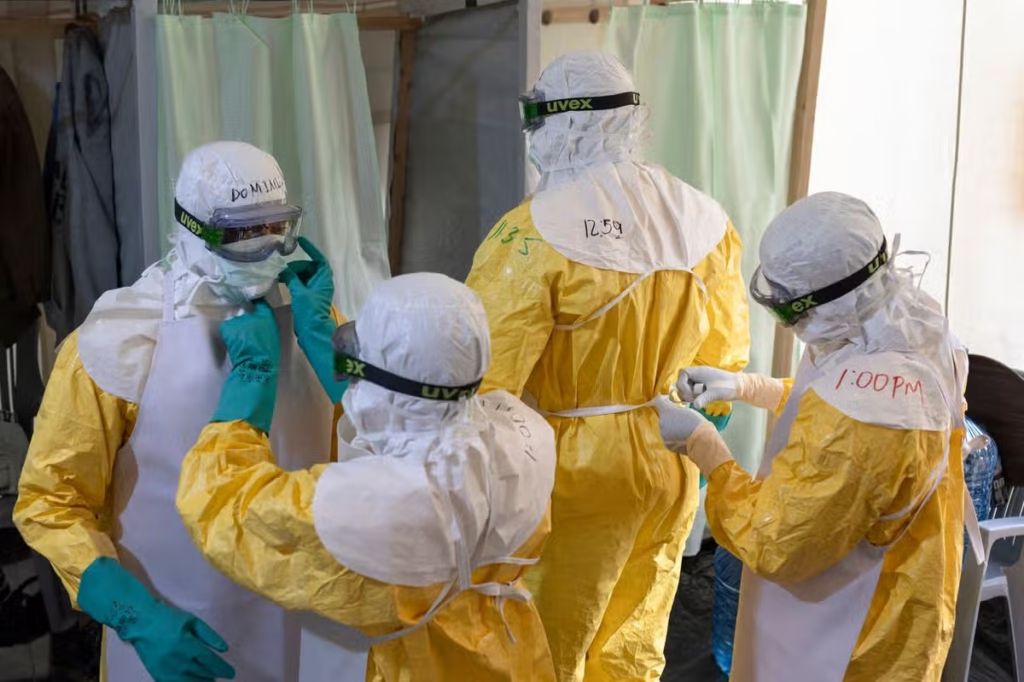
The Congo Ebola outbreak has caused at least 930 deaths, according to health officials in the Democratic Republic of the Congo. The latest figures show that 2,344 cases have been confirmed since the outbreak began, making it one of the fastest-growing Ebola outbreaks recorded.
Health authorities reported 37 new deaths within a 24-hour period, marking one of the highest daily death totals since the outbreak started. The increase has raised concerns about the continued spread of the virus in affected communities.
The outbreak was officially declared in eastern Democratic Republic of the Congo on May 15, 2026. It is linked to the Bundibugyo virus, a less common type of Ebola compared with the Zaire strain that caused the large outbreak in West Africa more than a decade ago.
The Bundibugyo virus is considered rare, and there is currently no approved vaccine or specific treatment designed for this strain. Health workers are focusing on controlling the spread through early detection, medical care, and public health measures.
Ebola spreads between people through direct contact with the blood or other body fluids of an infected person who has symptoms. The virus can spread quickly in communities when health systems face challenges in identifying cases and protecting people who care for patients.
The current outbreak affects areas in the Democratic Republic of the Congo and Uganda. Health teams are monitoring the situation closely as new cases continue to appear.
The rise in infections has created major challenges for local health services. Medical workers must respond to increasing numbers of patients while also protecting themselves and preventing further transmission.
Health experts say early reporting and community awareness are important tools in limiting the outbreak. People who may have contact with infected individuals are encouraged to seek medical help quickly if symptoms appear.
The outbreak is drawing attention because of its speed and the high number of deaths recorded in a short period. Previous Ebola outbreaks have shown that rapid action can help reduce transmission and protect communities.
The Bundibugyo virus was first identified in Uganda in 2007. It has caused fewer outbreaks than other Ebola strains, which means health systems have less experience dealing with it compared with more common forms of the virus.
The Zaire strain remains the most widely known type of Ebola because it caused the major West African epidemic between 2014 and 2016. That outbreak resulted in thousands of deaths and led to major changes in global Ebola response plans.
Health officials are continuing efforts to track cases, support hospitals, and provide information to communities affected by the current outbreak. International health groups are also watching developments as the situation changes.
The latest numbers highlight the serious impact of the Congo Ebola outbreak. With hundreds of deaths already reported and cases still increasing, health authorities face a difficult task in stopping the spread of the virus.
Officials say continued monitoring, faster response systems, and public cooperation will be key to reducing further infections. The coming weeks will be important in determining whether the outbreak can be brought under control.