
Strait of Hormuz crisis exposes EU energy weakness
Strait of Hormuz EU energy crisis concerns have intensified as disruptions in one of the world’s most critical shipping routes highlight Europe’s exposure to external energy shocks. According to Britain Chronicle analysis, the situation is revealing deep structural weaknesses in the European Union’s energy system, where economic integration has not been matched by equivalent energy
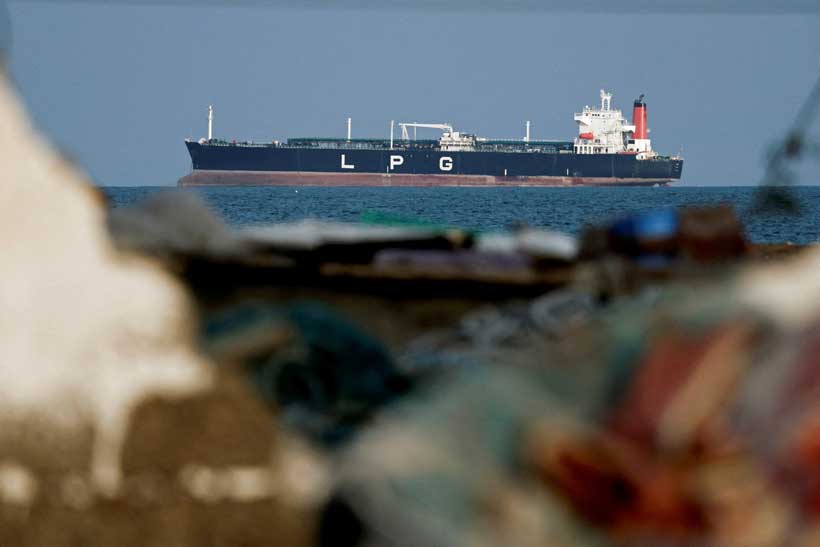
Strait of Hormuz EU energy crisis concerns have intensified as disruptions in one of the world’s most critical shipping routes highlight Europe’s exposure to external energy shocks.
According to Britain Chronicle analysis, the situation is revealing deep structural weaknesses in the European Union’s energy system, where economic integration has not been matched by equivalent energy independence or geopolitical control.
The crisis is now being viewed in Brussels not only as an external supply disruption but as a wider stress test of the EU’s strategic autonomy and long-term foreign policy credibility.
What Happened?
Strait of Hormuz EU energy crisis discussions have escalated following instability in the Middle East that has disrupted or threatened key maritime routes responsible for transporting liquefied natural gas (LNG) and crude oil to Europe.
The Strait of Hormuz, a vital chokepoint for global energy trade, is central to EU energy imports that feed industrial production, electricity generation, and transport fuel supply chains across multiple member states.
Analysts warn that any sustained disruption to this route can immediately affect European energy prices, particularly for natural gas and jet fuel, both of which are heavily reliant on imports from global markets.
The shockwaves from such disruptions extend beyond energy markets, feeding directly into inflation, industrial cost structures, and supply chain stability across the EU single market.
Germany, as Europe’s largest industrial economy, is often identified as the most exposed due to its dependence on uninterrupted energy imports to sustain manufacturing output and export competitiveness.
Why This Matters
Strait of Hormuz EU energy crisis pressures expose a fundamental contradiction within the European Union: deep economic integration combined with external energy dependency.
The EU’s single market ensures seamless internal trade, but it also amplifies vulnerability when external supply routes are disrupted, meaning shocks in distant regions can quickly cascade across all member states.
Industrial sectors, particularly in manufacturing-heavy economies, face rising risks as energy price volatility directly impacts production costs and global competitiveness.
Inflationary pressures also become more difficult to control when energy imports are disrupted, placing additional strain on fiscal policy and household spending across Europe.
This interconnected vulnerability means that a single geopolitical disruption in the Middle East can translate into systemic economic stress across the entire EU bloc.
What Analysts or Officials Are Saying
Strait of Hormuz EU energy crisis concerns are increasingly being linked to debates over European strategic autonomy and the effectiveness of the Common Foreign and Security Policy (CFSP).
Foreign policy analysts argue that the EU remains constrained in its ability to respond independently to external energy shocks due to diverging national interests among member states.
Some officials and researchers suggest that strengthening institutions such as the European External Action Service (EEAS) could improve collective responses to energy security threats and reduce reliance on external powers.
However, others caution that internal divisions within the EU make unified decision-making difficult, particularly when member states have different industrial dependencies and foreign policy priorities.
Energy experts also note that Europe’s reliance on maritime energy routes leaves it structurally exposed to geopolitical instability in key global shipping corridors.
Britain Chronicle Analysis
Strait of Hormuz EU energy crisis developments highlight a long-standing structural weakness in the European project: economic integration has outpaced geopolitical resilience.
While the EU has successfully built one of the world’s most integrated internal markets, it has not achieved comparable independence in critical external supply chains, especially energy.
This imbalance creates a strategic vulnerability where Europe’s economic stability is indirectly shaped by external actors and unstable global chokepoints.
The crisis also exposes limits in the EU’s ambition for strategic autonomy. Without unified foreign policy execution, energy security risks continue to be managed reactively rather than strategically.
At the same time, the situation is accelerating debate around Europe’s green transition. Reducing fossil fuel dependency is increasingly framed not only as a climate goal but as a security imperative designed to reduce exposure to geopolitical shocks.
In this context, the Strait of Hormuz becomes more than a regional flashpoint—it functions as a stress test for whether the EU can evolve from a dependent economic bloc into a strategically autonomous global actor.
What Happens Next
Strait of Hormuz EU energy crisis risks are expected to remain closely tied to geopolitical developments in the Middle East and global energy market stability.
In the short term, Europe is likely to focus on managing price volatility and securing alternative supply routes, particularly through diversified LNG imports and stock management.
In the medium term, the crisis may accelerate policy efforts to strengthen EU-level energy coordination and reduce dependence on single external corridors.
Long-term responses are expected to centre on expanding renewable energy capacity under the European Green Deal, with increased investment in wind, solar, and hydrogen infrastructure.
If geopolitical instability persists, the EU may face sustained pressure to redesign its energy security architecture, balancing open global trade with reduced exposure to high-risk supply chokepoints.
UK Nuclear Deterrent: Vital for Britain’s National Defence
Ministers Urged to Share Mandelson Vetting Files Amid Disclosure Row

UK Considers Under-16 AI Chatbot Ban Amid Safety Push

MP Calls for National Biosecurity Strategy UK at Core of Security

Connor Naismith: Why Blue Labour is True Labour

NHS Legal Anomaly Costs Billions: Calls for Urgent Reform