Keir Starmer Bids Farewell As Prime Minister
Outgoing British Prime Minister Keir Starmer delivered an emotional farewell in the House of Commons on Wednesday, promising to fully support his successor, Andy Burnham, as the United Kingdom prepares for a change in leadership. Speaking during his final Prime Minister’s Questions (PMQs), Starmer thanked lawmakers for their support during his time in office and
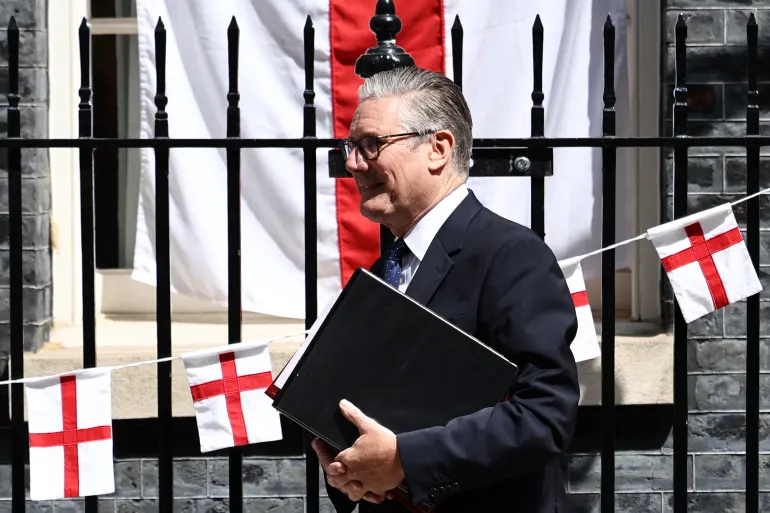
Outgoing British Prime Minister Keir Starmer delivered an emotional farewell in the House of Commons on Wednesday, promising to fully support his successor, Andy Burnham, as the United Kingdom prepares for a change in leadership.
Speaking during his final Prime Minister’s Questions (PMQs), Starmer thanked lawmakers for their support during his time in office and said he wanted the next Labour leader to succeed for the good of both the party and the country.
Starmer told Members of Parliament that he would offer his full support to Burnham whenever it was requested. He said his advice would be given privately rather than through public comments, emphasizing that he wanted the new prime minister to have the space to lead.
“I want this Labour government to be a success,” Starmer said during the session. He added that he also wanted the country to succeed and pledged his wholehearted support for the incoming leader.
The appearance marked Starmer’s final PMQs before officially leaving office next week. His departure follows his resignation announcement last month after facing months of political pressure linked to a series of controversies, policy reversals, and internal party challenges.
Starmer became prime minister after leading the Labour Party to a decisive victory in the 2024 general election, ending 14 years of Conservative government. Despite that historic win, his premiership lasted only two years before he announced his decision to step down.
Andy Burnham is expected to be confirmed as Labour leader on Friday before formally becoming prime minister on Monday. Burnham secured strong backing from Labour’s 403 Members of Parliament as well as support from major trade unions.
Because Labour holds a comfortable majority in the 650-seat House of Commons, Burnham is expected to automatically become the next prime minister once he is formally appointed. He is also expected to meet King Charles III on Monday as part of the constitutional process for forming a new government.
Wednesday’s Prime Minister’s Questions featured a noticeably different atmosphere from the usually lively and confrontational weekly session. Members from across the political spectrum offered Starmer their best wishes and thanked him for his public service as he prepared to leave office.
Several lawmakers also made light-hearted comments about England’s FIFA World Cup semifinal against Argentina, encouraging Starmer to enjoy the match and hoping the national team would reach the final.
Although the mood was largely respectful, opposition politicians continued to challenge the government during the debate.
Conservative Party leader Kemi Badenoch joked that Starmer had spent too much time focusing on divisions within the Conservative Party instead of paying attention to concerns among Labour lawmakers.
She also argued that replacing the prime minister would not solve the country's broader challenges. Badenoch said Britain still faces difficult decisions and suggested Labour’s political challenges may continue under new leadership.
Despite the criticism, many MPs applauded Starmer as he concluded his final appearance. Several members stood to recognize his service as he delivered his closing remarks from the center of the House of Commons.
Starmer ended his speech by saying goodbye to Parliament and joked that he planned to be home in time to watch England’s World Cup semifinal on television.
Reflecting on his time in office, he described the occasion as the end of his political journey. He also expressed pride in what his government had achieved during its two years in power.
The leadership transition comes during a busy period for British politics, with Burnham expected to quickly begin forming his government after taking office. His administration will inherit key issues including the economy, public services, foreign policy, and ongoing domestic reforms.
The change in leadership also continues a period of frequent political transitions in the United Kingdom. Burnham is set to become the country's seventh prime minister in the past decade.
As Starmer prepares to leave Downing Street, he has made clear that he intends to support the new Labour leadership from outside the spotlight. His final appearance in Parliament closed one chapter in British politics while opening another as Andy Burnham prepares to lead both the Labour Party and the United Kingdom.