Starmer pushes UK social media ban
Britain is preparing a major new rule that would stop children under 16 from using several social media apps. Prime Minister Keir Starmer announced the plan on Monday. It would affect platforms such as TikTok, Snapchat, Instagram, Facebook, X, and YouTube. The goal is to protect young users from harmful content and too much screen
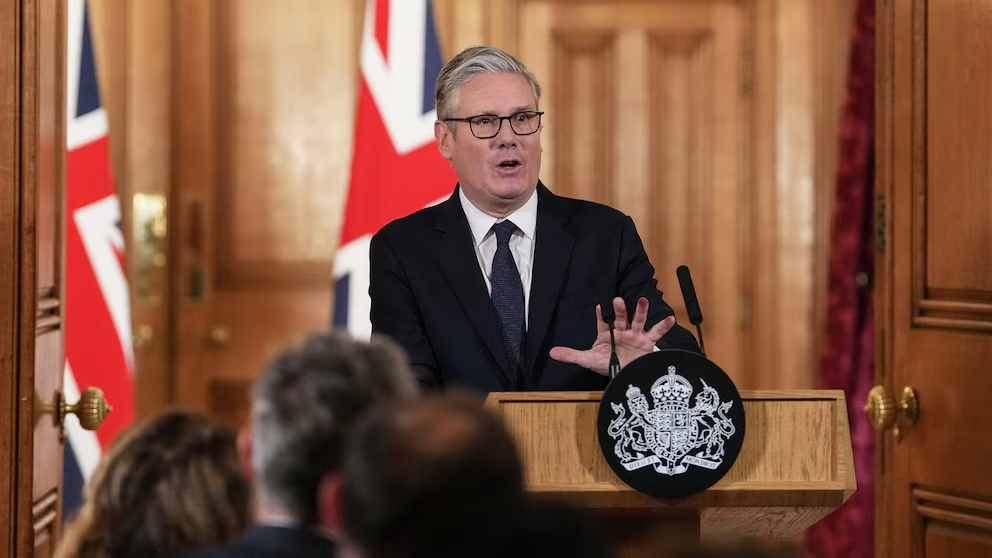
Britain is preparing a major new rule that would stop children under 16 from using several social media apps. Prime Minister Keir Starmer announced the plan on Monday. It would affect platforms such as TikTok, Snapchat, Instagram, Facebook, X, and YouTube. The goal is to protect young users from harmful content and too much screen time.
The proposal is one of the strongest online safety moves the UK has ever taken. It would place legal responsibility on tech companies to block underage users. If companies fail to act, they could face heavy fines. The government said the rules are expected to begin early next year.
Starmer said the aim is simple: keep children safe online. He compared the plan to rules on alcohol. He said society does not give up on age limits just because some people break the law. He believes the same logic should apply to social media use.
He also admitted that some teenagers will try to bypass the ban. But he said the government must still act. He stressed that he is not willing to ignore growing concerns from parents about children’s mental health and online safety. He said many families have asked for stronger action.
The government says the policy is based on public demand. A consultation received 116,000 responses. More than 90 percent supported an under-16 restriction. Officials say this shows strong public backing for tighter controls on social media use by children.
However, the plan has triggered a strong debate. Major tech companies warned the ban may not work as intended. YouTube said strict bans could push children toward less safe, unregulated online spaces. Meta, the parent company of Facebook and Instagram, said teenagers might move to platforms with fewer protections.
Experts have also raised doubts about enforcement. Critics say age checks are easy to bypass. They argue that tech tools cannot fully stop underage users from creating accounts. Some researchers say the focus should instead be on harmful content and algorithms rather than blocking access entirely.
Kate Edwards from the Molly Rose Foundation said the real issue is how harmful content spreads online. She said age bans do not fix algorithm problems that push damaging material to young users. The foundation was created after the death of teenager Molly Russell, who was exposed to harmful online content.
Some academics share similar concerns. Professor Jon Crowcroft from the University of Cambridge said blocking access may lead children to worse platforms. He said technical enforcement is very difficult and may not solve the core problem.
Despite criticism, supporters of the plan say urgent action is needed. Ellen Roome, a child safety campaigner, welcomed the move. She said tech companies have had years to improve safety systems but have not done enough. She believes stronger laws are necessary to protect children online.
The UK government also plans additional measures beyond the age ban. These may include limits on contact from strangers in gaming and livestream platforms. Officials are also studying possible night-time limits and controls on endless scrolling for users under 18. More details are expected to be released next month.
The UK approach follows a global trend. Countries such as Australia, Brazil, Canada, and Indonesia have already introduced or proposed similar age-based restrictions. France, Spain, Denmark, Thailand, and South Korea are also reviewing similar policies. Australia was the first country to fully ban under-16s from holding social media accounts.
The UK plan would follow a similar model but with stronger penalties for companies that fail to comply. The government says enforcement will target platforms, not children. It also excludes messaging apps like WhatsApp and Signal, as well as YouTube Kids.
The decision could also create tension with the United States. American officials have previously warned that strict regulations may affect free speech and place pressure on US tech companies. The UK government says it will discuss the issue with global leaders at an upcoming G7 summit.
Starmer said child protection must come first in the digital age. He said leaders around the world agree that stronger safeguards are needed. He added that protecting children online should not be a political debate but a shared responsibility.