
Inside Elon Musk’s 14 Children and Their Family Network
Elon Musk has 14 children with four different partners, forming one of the most closely followed and complex family structures linked to a global business leader. According to Britain Chronicle analysis, the scale and public visibility of Musk’s family life reflects a broader intersection between private relationships and the intense scrutiny surrounding one of the
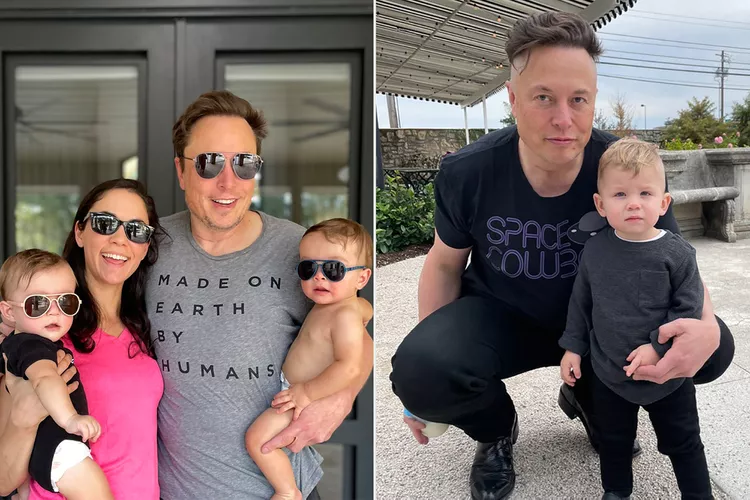
Elon Musk has 14 children with four different partners, forming one of the most closely followed and complex family structures linked to a global business leader.
According to Britain Chronicle analysis, the scale and public visibility of Musk’s family life reflects a broader intersection between private relationships and the intense scrutiny surrounding one of the world’s most influential tech figures.
The information has re-emerged following renewed public interest in Musk’s personal life, his public statements on population decline, and continued media attention on his relationships and children.
What Happened?
Elon Musk’s family includes 14 known children with four partners: Justine Wilson, musician Grimes, Neuralink executive Shivon Zilis, and author Ashley St. Clair.
His first child, Nevada, was born in 2002 but tragically died in infancy. He later had twins Vivian and Griffin with Justine Wilson, followed by triplets Kai, Saxon and Damian.
With Grimes, Musk has three children, including X Æ A-Xii, Exa Dark Sideræl and Techno Mechanicus. Their unusual names have attracted widespread public attention and debate since their births.
With Shivon Zilis, Musk has welcomed four children, including twins Strider and Azure, and two younger children, Arcadia and Seldon Lycurgus. These births were partly revealed through court filings, biographies and later public confirmations.
Most recently, Musk was reported to have a child named Romulus with Ashley St. Clair, bringing renewed attention to the scale of his family network and the privacy surrounding some of the births.
Across different relationships, some births were widely publicised while others were only confirmed months later through secondary reporting or social media disclosures.
Why This Matters
Musk’s family life has become part of broader public discussion due to his high-profile status as a technology entrepreneur and his outspoken views on population decline and birth rates.
His public statements advocating for higher birth rates have drawn attention to the contrast between his personal family size and wider global demographic trends.
The visibility of his children has also raised ongoing debate about privacy, especially for minors connected to public figures whose personal lives are frequently covered by international media.
At the same time, his family structure highlights how modern public figures often navigate complex personal relationships under constant digital and media scrutiny.
What Analysts or Officials Are Saying
Observers of celebrity and business culture note that Musk’s family has become unusually visible compared to most private individuals, partly due to his global profile and active presence on social media.
Some analysts point out that public interest in his children is driven not only by curiosity but also by his influence in sectors such as technology, space exploration and artificial intelligence.
Commentators have also highlighted how Musk’s public statements about civilisation, demographics and family growth have intensified attention on his personal life choices.
Meanwhile, privacy-focused voices argue that repeated media coverage of children connected to public figures raises ethical concerns, particularly when details emerge through indirect or unofficial channels.
Britain Chronicle Analysis
The scale of attention around Musk’s children illustrates how personal and political narratives can merge when a single individual holds significant influence across technology, business and public discourse.
What would normally remain private family information has become part of a wider cultural conversation shaped by Musk’s visibility, statements and institutional reach.
This dynamic reflects a broader shift in modern media, where the boundaries between public leadership and private life are increasingly blurred for high-profile figures.
It also raises questions about how much detail about family structures should enter the public domain when they intersect with global economic and technological influence.
What Happens Next
Public interest in Musk’s family is likely to continue as new developments emerge through media reporting, biographies and social media disclosures.
Further attention may also arise if Musk continues to speak publicly about population policy and demographic change, linking personal and political narratives.
Ongoing debates around privacy for children of public figures are expected to remain a point of discussion among journalists, ethicists and digital platforms.
For now, Musk’s family structure remains one of the most widely documented and closely followed among global technology leaders.
Kanye West’s Poland Concert Cancelled After Legal Pressure

Sydney Sweeney Expands Business Push Beyond Hollywood

National Theatre signs Europe cinema deal with Pom

Revolve Festival 2026 Draws Stars to Desert Style Event

Royal Stylists Reveal Queen’s Hidden Clothing Rule
Maya Jama Stuns in Bold Cutout Rimmel Campaign Look