Rwanda UK Migration Deal Claim Rejected By Court
An international arbitration court has rejected a claim by Rwanda seeking more than £100 million from the United Kingdom over a cancelled migrant relocation agreement, bringing a legal dispute over the controversial scheme to a close. The Permanent Court of Arbitration in The Hague ruled on Monday that the United Kingdom was not responsible for
An international arbitration court has rejected a claim by Rwanda seeking more than £100 million from the United Kingdom over a cancelled migrant relocation agreement, bringing a legal dispute over the controversial scheme to a close.
The Permanent Court of Arbitration in The Hague ruled on Monday that the United Kingdom was not responsible for paying two years of outstanding costs linked to the migration deal. Rwanda had argued that London still owed funds after the program was suspended and later scrapped.
The claim was worth around $135 million and related to payments Rwanda said were due under the agreement. However, the tribunal ruled in favour of the UK on all grounds, according to a British government spokesperson.
The UK government welcomed the decision, saying it had robustly defended its position throughout the proceedings. Officials in London said they are now focused on broader immigration reforms aimed at reducing irregular migration and increasing deportations of people with no legal right to remain in the country.
The ruling marks the latest development in a long-running political and legal dispute over a migration plan first announced in 2022 under then Prime Minister Boris Johnson. The agreement aimed to send some asylum seekers arriving in the UK through irregular routes to Rwanda for processing and potential resettlement.
The policy was designed to deter dangerous crossings of the English Channel by small boats and other irregular travel routes. However, it faced immediate legal challenges and strong political opposition from the outset.
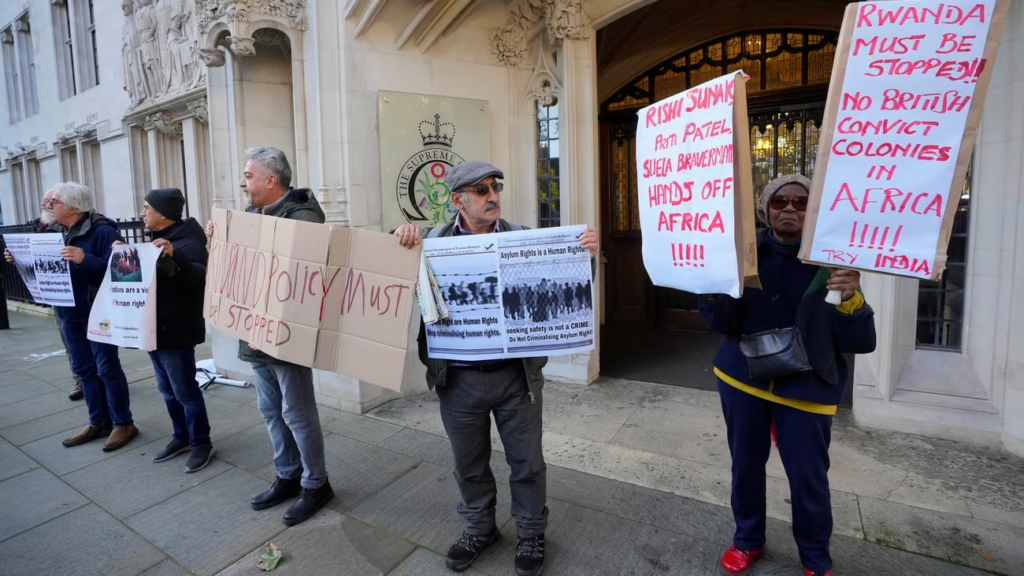
The UK Supreme Court later ruled the plan unlawful, citing concerns over safety and legal protections for asylum seekers. The ruling effectively blocked implementation of the scheme.
When Keir Starmer became prime minister in July 2024, he declared the policy “dead and buried” on his first full day in office, describing it as ineffective and costly. Senior officials in his government also criticised the project as a misuse of public funds.
According to official UK figures, approximately £290 million had already been paid to Rwanda before the program was cancelled. Only a small number of individuals were ever relocated under the scheme, and all of them reportedly went voluntarily.
Rwanda, however, argued that additional payments were still due under the agreement. It claimed that two annual instalments of £50 million each remained outstanding at the time the program was suspended.
The arbitration tribunal rejected these claims, including both the disputed payments, concluding that the UK was not legally obliged to continue funding the scheme after its cancellation.
The Permanent Court of Arbitration, based in The Hague and established in 1899, handles disputes between states and international organisations. Its ruling is binding under the terms of the arbitration process used in this case.
The decision comes amid already strained relations between London and Kigali. The UK has previously reduced aid to Rwanda, accusing the country of involvement in supporting M23 rebel forces operating in neighbouring Democratic Republic of Congo. Rwanda has denied the allegations.
The migration agreement had long been one of the most controversial elements of UK immigration policy, drawing criticism from human rights groups, legal experts, and opposition parties. Supporters argued it was necessary to discourage illegal crossings and dismantle smuggling networks.
With the court ruling now concluded, both governments are expected to shift focus away from the dispute, although broader tensions over migration policy and regional security issues remain unresolved.
The case highlights the financial and diplomatic consequences of international migration agreements that become politically contested, particularly when domestic legal systems intervene to halt implementation.
For the UK government, the ruling removes a potential financial liability, while for Rwanda it represents a setback in its effort to recover additional payments linked to the cancelled programme.