UK Shadow Fleet Seizure Hits Russian Oil Route
The United Kingdom has carried out a major maritime operation by seizing a Russian-linked oil tanker suspected of breaking sanctions in the English Channel. The move marks one of the most significant enforcement actions yet against Russia’s so-called “shadow fleet,” a network of vessels used to move oil around global restrictions. The UK Shadow Fleet
The United Kingdom has carried out a major maritime operation by seizing a Russian-linked oil tanker suspected of breaking sanctions in the English Channel. The move marks one of the most significant enforcement actions yet against Russia’s so-called “shadow fleet,” a network of vessels used to move oil around global restrictions.
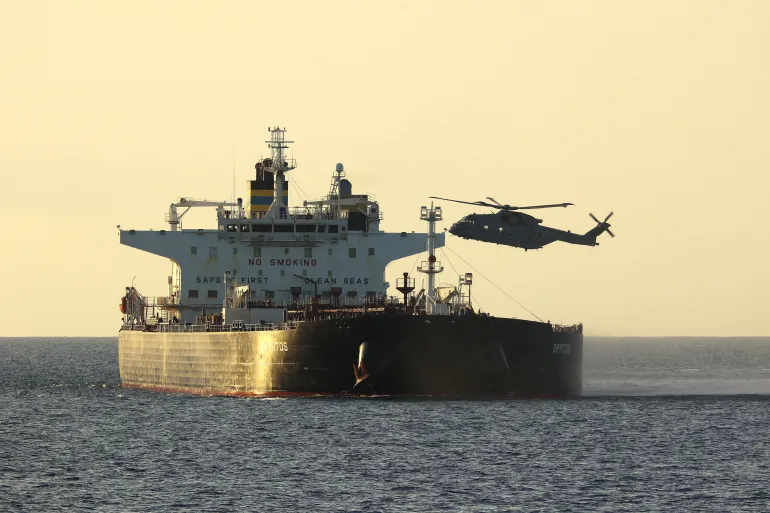
The UK Shadow Fleet Seizure was confirmed after British forces boarded and detained the tanker Smyrtos during a coordinated military and law enforcement operation on Sunday. The ship was carrying large volumes of crude oil and was traveling under a foreign flag when it was intercepted.
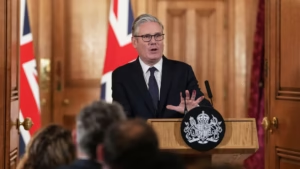
Prime Minister Keir Starmer said the operation sends a strong message to those helping fund Russia’s war in Ukraine. He said the UK will continue to act against attempts to bypass international sanctions.
The operation involved Royal Marines, the National Crime Agency, and support from naval and air forces. Officers reportedly boarded the vessel in a pre-dawn raid using helicopters and secured control of the ship within hours.
Authorities say the tanker had departed from Russia’s Baltic port region earlier in the month and was heading toward the Suez Canal route. It was believed to be transporting hundreds of thousands of barrels of oil linked to Russian exports.
The vessel is now anchored off the UK coast while investigators assess potential sanctions violations and safety concerns. Officials also confirmed that the crew, made up of multiple nationalities, remains on board.
The seizure is the first time the UK has directly detained a vessel from Russia’s shadow fleet while it was passing through its waters. The shadow fleet refers to hundreds of aging or re-flagged tankers used to transport Russian oil while avoiding Western sanctions imposed after the Ukraine war began in 2022.
Western countries, including the UK, have banned services such as insurance and shipping support for vessels linked to sanctioned Russian oil exports. These measures are designed to reduce Moscow’s oil revenues, which remain a key source of funding for its war effort.
Analysts say the shadow fleet operates through complex ownership structures. Many ships are registered under companies in different countries, making it harder to trace responsibility or enforce restrictions. In this case, ownership was linked to overseas-registered firms and international management groups.
Experts say sanctions have increased the cost and difficulty of Russian oil exports, but have not stopped them. Russia continues to sell large volumes of crude oil, often at discounted prices, to major buyers including countries in Asia.
The UK government has recently expanded its legal authority to stop and board sanctioned vessels in its waters. Officials say more than 500 ships linked to Russia’s shadow fleet are now under sanctions, with increased monitoring across key shipping routes.
The European Union and other Western allies have taken similar steps, including detaining suspected vessels and tightening maritime inspections. However, legal experts note that enforcement remains complex due to international maritime law and disputes over jurisdiction.
The seizure has already caused ripple effects in shipping routes. Several vessels reportedly changed course away from the English Channel after the operation, suggesting increased caution among operators linked to Russian oil transport.
Ukraine welcomed the UK’s action, saying it weakens Russia’s ability to finance its military operations. Ukrainian officials have repeatedly argued that oil and gas revenues are central to Russia’s war economy.
Experts say the immediate impact on global oil flows is likely to be limited. However, the operation may increase shipping costs and force tankers to take longer, more dangerous routes to avoid European waters.
Avoiding the English Channel adds significant distance to journeys toward major export destinations, increasing fuel use and travel time. This could raise costs for shipping companies involved in Russian oil transport.
Security analysts say retaliation from Russia is unlikely in the short term, though tensions may rise. Similar actions by France, Finland, Sweden, and Estonia have already increased pressure on shadow fleet operations across Europe.
The UK says its goal is to reduce Russia’s ability to bypass sanctions while staying within international legal frameworks. Officials argue that targeting shadow fleet logistics is one of the most effective ways to limit oil revenue without directly disrupting global energy markets.
For now, the seized tanker remains under investigation, and the case is expected to test how far Western countries can go in enforcing maritime sanctions against Russia’s evolving oil transport network.