Britain Germany Fighter Partnership Talks Advance
Britain has said it is open to Germany joining the Global Combat Air Programme, a project intended to develop a next-generation fighter aircraft. Prime Minister Andy Burnham discussed the possibility with German Chancellor Friedrich Merz during a meeting in Berlin. The proposal comes as European countries consider how to cooperate on defence technology and share
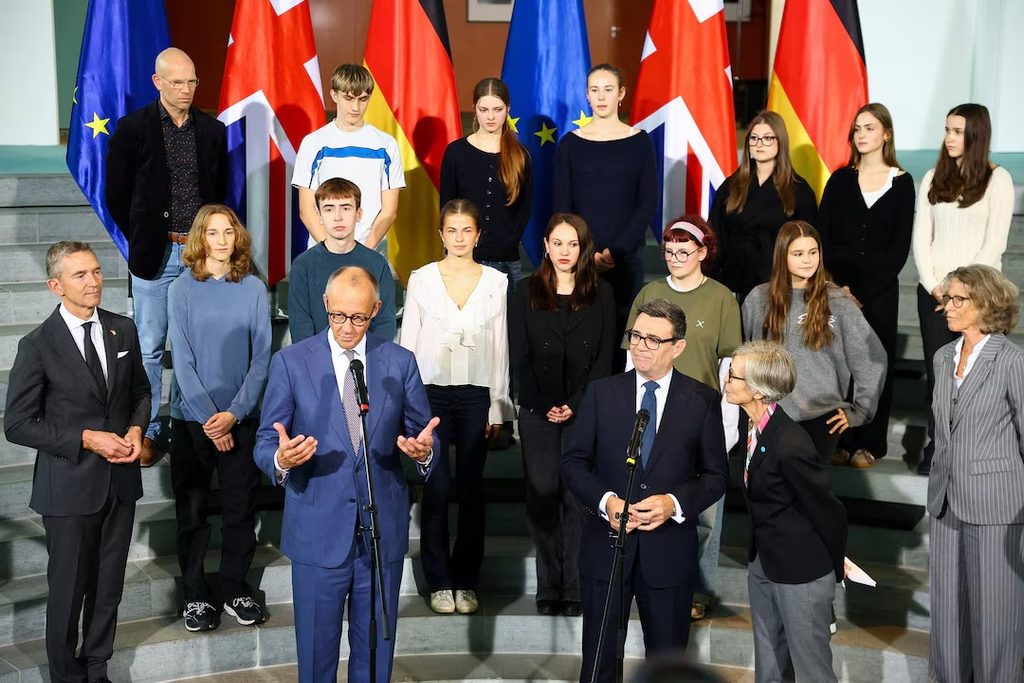
Britain has said it is open to Germany joining the Global Combat Air Programme, a project intended to develop a next-generation fighter aircraft. Prime Minister Andy Burnham discussed the possibility with German Chancellor Friedrich Merz during a meeting in Berlin. The proposal comes as European countries consider how to cooperate on defence technology and share the cost of developing advanced military equipment.
The programme is a partnership involving Britain, Italy and Japan. It aims to produce an aircraft for future military use, with a target date of 2035. The project is led by major industrial companies from the three participating countries. Germany's possible involvement has gained attention after its separate effort with France to develop a future fighter aircraft faced serious difficulties.
A German government official said no decision had been made on joining the programme. Berlin has previously supported cooperation between European countries on defence projects. Germany also has experience working with Britain and Italy through the Eurofighter Typhoon programme, giving the countries an existing base for industrial and technical cooperation.
Adding Germany could offer financial and industrial benefits. Advanced fighter aircraft require years of research, testing and development, as well as large investments in engines, sensors, software and weapons systems. A wider partnership could spread some of those costs across more participants and create a larger market for the aircraft. It could also bring together companies with different technical strengths.
However, a new partnership would involve difficult decisions. Countries would need to agree on how much each contributes, how the aircraft is designed and who controls key technologies. They would also need to settle questions about production, export rules and the distribution of work among national industries. These issues can become sensitive because governments want to protect their own defence companies and skilled jobs.
The 2035 target adds pressure to any expansion. A new partner could provide more resources, but changes to the programme might also complicate planning. Britain, Italy and Japan would need to consider how additional requirements could affect design decisions and schedules. Japan has placed importance on the aircraft's planned delivery date, while European governments are also weighing broader security needs.
The proposal reflects a wider shift in European defence policy. Governments are considering how to improve military capability, strengthen industrial supply chains and reduce risks linked to dependence on outside suppliers. Russia's war against Ukraine and wider international tensions have added urgency to discussions about defence spending and cooperation.
For Britain, Germany's potential participation could deepen industrial ties with one of Europe's largest economies. For Germany, it could offer another route into a major future aircraft project. Yet the announcement remains an opening rather than a final agreement. The next step would be detailed talks about the conditions of participation and whether the programme can accommodate a new partner without delaying its goals.
NHS Trusts Question Value of Palantir Data Platform

Russell Brand Trial Continues as Court Hears Evidence

UK Budget Faces Close Watch From Financial Markets

UK Regulator Targets Microsoft’s Business Software Power

UK Economy Grows Despite Pressure on Household Budgets

UK Urges Stronger Sanctions on Russian Shipping