Europe summer travel chaos fears over flights rise
Europe summer travel chaos concerns are growing as airlines, airports, and governments prepare for a potentially difficult holiday season shaped by fuel uncertainty, border delays, and ongoing geopolitical tension. According to Britain Chronicle analysis, the combination of EU border system disruptions and unstable global energy conditions is creating a rare convergence of risks for airlines
Europe summer travel chaos concerns are growing as airlines, airports, and governments prepare for a potentially difficult holiday season shaped by fuel uncertainty, border delays, and ongoing geopolitical tension.
According to Britain Chronicle analysis, the combination of EU border system disruptions and unstable global energy conditions is creating a rare convergence of risks for airlines and passengers heading into peak summer demand.
The situation comes as travellers across the UK and Europe continue to face longer queues, shifting rules, and rising costs, with confidence in smooth holiday travel under pressure once again.
What Happened?
Europe summer travel chaos fears have intensified due to three overlapping pressures: the slow rollout of the EU’s Entry-Exit System (EES), uncertainty around global jet fuel supply, and warnings from airlines about possible operational disruptions.
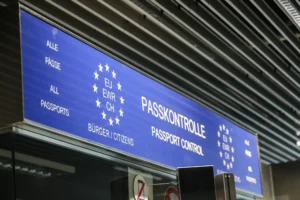
The EES, designed to replace passport stamping with biometric checks for non-EU travellers, has faced uneven implementation across Schengen countries. Despite a 10 April deadline for full operation, many border points remain only partially ready, leading to inconsistent processing times and long queues at some airports.
At the same time, airlines are monitoring global fuel supply risks linked to instability in key oil shipping routes, including the Strait of Hormuz. Industry warnings have raised the possibility of reduced flight schedules or cancellations if supply disruptions worsen, although some carriers insist there is no immediate shortage.
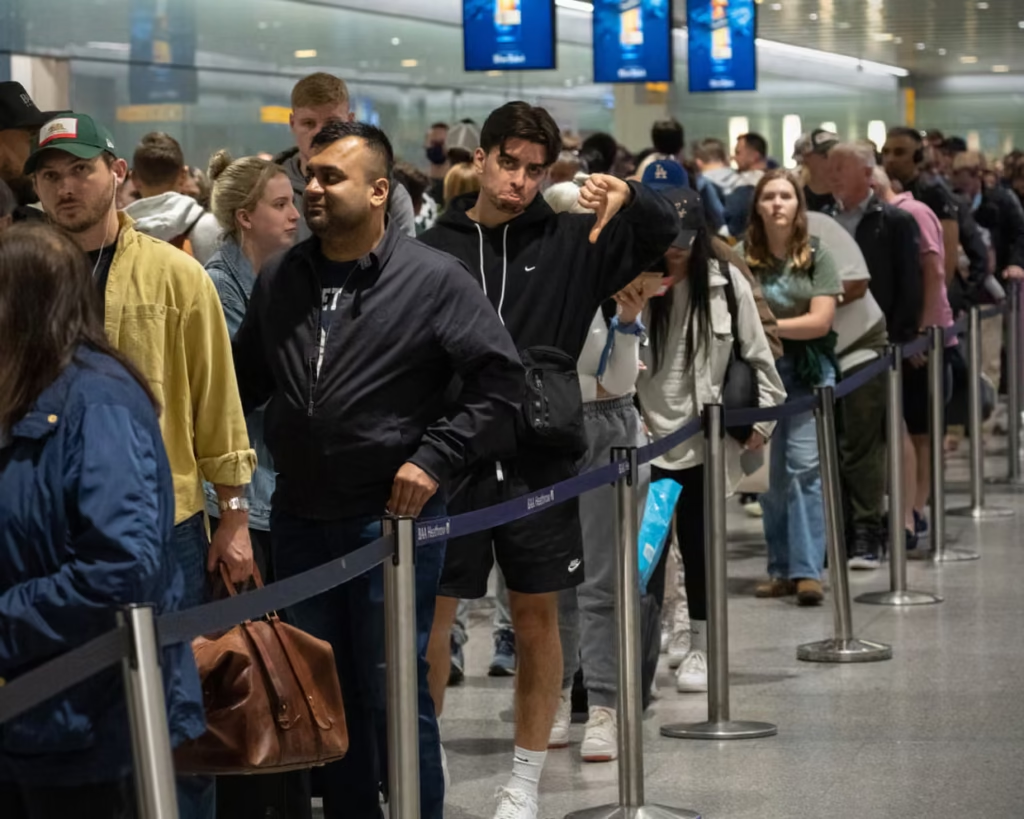
Airports in several European cities have already reported delays of up to three hours, with some passengers missing connections due to slow border processing linked to the new system.
Why This Matters
Europe summer travel chaos is not just a short-term inconvenience—it highlights deeper structural pressure points in European travel infrastructure.
First, the aviation system is still recovering from years of disruption caused by the pandemic and labour shortages. Airport staffing levels in many countries remain below pre-2020 capacity, making them vulnerable to any new processing delays.
Second, Europe’s reliance on imported jet fuel, particularly from Gulf regions, creates exposure to geopolitical instability. Even temporary disruption in supply routes can quickly translate into price spikes and capacity adjustments.
Finally, the rollout of the EU’s digital border system is exposing uneven readiness across member states. Countries with high tourist traffic are struggling the most, as processing times directly impact peak-season efficiency.
Together, these factors create a fragile environment where even small disruptions can cascade into wider travel delays.
What Analysts or Officials Are Saying
Industry analysts remain divided on the severity of the risks behind Europe summer travel chaos, particularly regarding fuel supply.
Some airline executives argue that current supply chains remain stable and that airlines are actively managing risk through hedging and diversified sourcing strategies. Others caution that visibility into fuel availability is limited, making longer-term forecasting uncertain.
Energy analysts note that European jet fuel stocks are currently lower than in recent years, but stress that global supply flexibility—particularly from the United States—helps prevent immediate shortages.
Transport economists also warn that airlines may not be fully transparent about potential risks, as public confidence plays a key role in maintaining bookings during the peak season.
Meanwhile, EU officials acknowledge that the Entry-Exit System rollout is still uneven and that “fine tuning” is required at several border points, though they maintain that overall implementation is progressing.
Britain Chronicle Analysis
Europe summer travel chaos reflects a broader tension between political ambition and operational reality in European mobility systems.
The EU’s push toward fully digital borders aims to modernise security and streamline travel, but the current rollout shows how complex large-scale technological transitions become when applied across dozens of countries with different infrastructure capacities.
At the same time, airlines are operating in an environment where energy volatility and geopolitical uncertainty can quickly reshape cost structures. This leaves little margin for error, especially for low-cost carriers that depend heavily on high-volume, low-margin routes.
What emerges is a travel system under simultaneous pressure from technology transition, economic uncertainty, and global energy instability. Even if none of these factors alone triggers a collapse in services, their combination increases the likelihood of regional disruption and uneven passenger experiences across Europe.
For travellers, the risk is less about total system breakdown and more about unpredictability—longer queues in some locations, higher fares in others, and occasional last-minute schedule changes.
What Happens Next
Europe summer travel chaos will largely depend on how quickly border systems stabilise and whether fuel markets remain steady through peak travel months.
If the EU’s Entry-Exit System continues to experience delays in implementation, airports may remain uneven in how they process non-EU travellers, especially during peak holiday periods.
On the fuel side, much depends on geopolitical stability and shipping security in key energy corridors. Any sustained disruption could force airlines to adjust schedules or raise fares further.
Despite these risks, most aviation experts still expect flights to operate broadly as planned, with airlines more likely to adjust capacity and pricing than to ground large numbers of aircraft.
However, the combination of system strain and external uncertainty means passengers are likely to face a more variable and less predictable summer travel experience than in previous years.