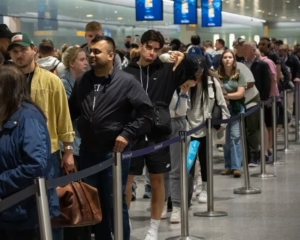
Europe airport EES queues spark travel delays rise
Europe airport EES queues are causing growing disruption across major airports as the European Union’s new Entry/Exit System begins full enforcement across the Schengen Area. According to Britain Chronicle analysis, the rollout of biometric border checks has exposed operational weaknesses in airport staffing and digital infrastructure at a time when international travel demand is rising
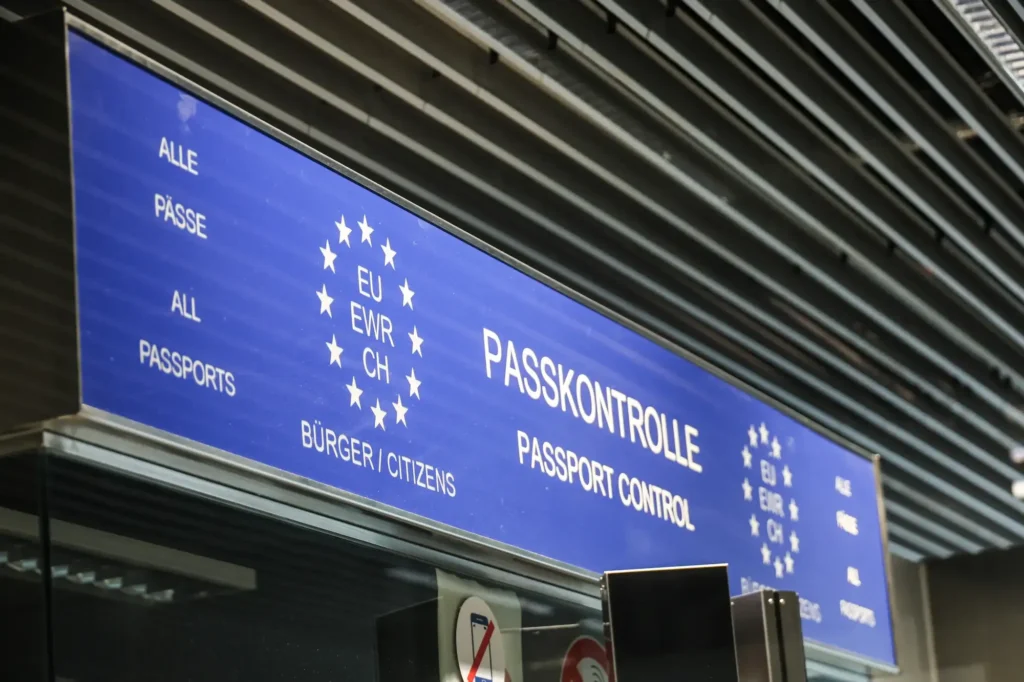
Europe airport EES queues are causing growing disruption across major airports as the European Union’s new Entry/Exit System begins full enforcement across the Schengen Area.
According to Britain Chronicle analysis, the rollout of biometric border checks has exposed operational weaknesses in airport staffing and digital infrastructure at a time when international travel demand is rising ahead of the summer season.
The system, designed to modernise border control by replacing passport stamps with digital registration, is now triggering significant delays for non-EU travellers, including those from the United Kingdom.
What Happened?
Europe airport EES queues have emerged after the EU activated its Entry/Exit System across Schengen border points, requiring non-EU travellers to register biometric data, including facial images and fingerprints.
The system replaces traditional passport stamping and is intended to track entry and exit movements for short-stay visitors, enforcing the 90-day stay limit within 180 days.
However, airports across Europe are reporting severe congestion as the system struggles to process high volumes of passengers during peak travel periods.
Reports from several major airports indicate waiting times extending to two or even three hours, with some travellers missing connecting flights due to delays in biometric registration.
The system has also faced technical inconsistencies, with some passengers required to repeat registration processes when their data does not automatically transfer between locations.
Why This Matters
Europe airport EES queues are more than a temporary inconvenience—they highlight the challenges of implementing large-scale digital border systems across multiple countries simultaneously.
Airports are now dealing with a slower per-passenger processing rate, but many have not yet increased staffing or expanded border control capacity to match the new system requirements.
This mismatch between policy ambition and operational readiness is creating bottlenecks, particularly at airports with high volumes of non-EU travellers.
The issue is expected to become more visible during peak summer months, when passenger numbers typically surge across Mediterranean and major European destinations.
For airlines and airports, delays not only disrupt schedules but also increase operational costs and reduce overall efficiency in tightly coordinated flight networks.
What Analysts or Officials Are Saying
Airport industry representatives have warned that Europe airport EES queues are already showing signs of strain across multiple countries.
Aviation bodies report that waiting times have significantly increased at border control points, particularly during peak arrival windows.
Some transport analysts argue that processing times per passenger have risen sharply without a matching increase in infrastructure or staffing levels at key airports.
At the same time, European Commission officials maintain that the system is functioning within expected parameters in most locations, noting that early technical issues are normal during large-scale system rollouts.
They have emphasised that responsibility for implementation lies with individual member states, many of which are still adjusting to the operational demands of the new system.
Britain Chronicle Analysis
Europe airport EES queues reveal a structural tension at the heart of the EU’s digital border transformation: efficiency gains on paper do not automatically translate into efficiency at ground level.
While the Entry/Exit System is designed to improve long-term security and streamline border tracking, its early rollout phase is creating the opposite effect in practice—slower movement and higher congestion.
The situation also exposes uneven preparedness across European airports, where some hubs have adapted quickly while others are still struggling with basic system integration and passenger flow management.
For UK travellers, who make up a large share of non-EU visitors to Europe, the impact is particularly visible. Their travel experience now depends heavily on where and when they enter the Schengen zone.
The broader concern is whether Europe’s aviation system can absorb digital transformation without sustained disruption during peak demand periods, especially as tourism rebounds and geopolitical pressures continue to affect travel patterns.
Relevant updates and related coverage are available via [Britain Chronicle Homepage] and [Category Page].
What Happens Next
Europe airport EES queues are likely to remain a feature of the system’s early rollout phase as airports continue adapting to biometric registration requirements.
Over time, processing is expected to become faster once passengers are fully enrolled in the system and technical integration improves between border checkpoints.
However, short-term pressure is expected to increase as summer travel volumes rise, potentially extending delays at busy hubs.
Airports may respond by adding temporary staffing or adjusting passenger flow systems, but structural improvements will likely take time.
For now, travellers entering the Schengen Area should expect longer border processing times, particularly at peak hours and major international gateways.