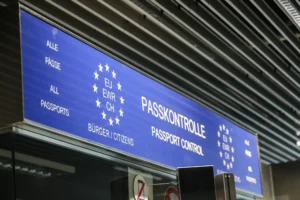
Greece UK biometric border exemption explained
Greece UK biometric border exemption has been introduced as Greece moves away from strict EU entry-exit biometric checks for British travellers at its airports and ports. According to Britain Chronicle analysis, the decision highlights growing friction between EU-wide digital border rules and the practical demands of high-volume tourist destinations that rely heavily on fast passenger

Greece UK biometric border exemption has been introduced as Greece moves away from strict EU entry-exit biometric checks for British travellers at its airports and ports.
According to Britain Chronicle analysis, the decision highlights growing friction between EU-wide digital border rules and the practical demands of high-volume tourist destinations that rely heavily on fast passenger processing.
The timing comes as the European Union continues rolling out its Entry/Exit System, designed to replace traditional passport stamping with biometric registration across all Schengen borders.
What Happened?
Greece UK biometric border exemption means British travellers entering Greece will not be required to complete full biometric registration under the EU’s Entry/Exit System, at least for now.
Instead of fingerprint scans and facial recognition enrolment, UK passport holders will continue to pass through the older, faster system of manual passport checks and stamps at Greek border points.
The decision was highlighted by Eleni Skarveli, UK director of the Greek National Tourism Organisation, who said the change would help ensure a smoother arrival experience and reduce congestion during busy travel periods.
The EU’s Entry/Exit System, which began rolling out from 10 April, applies to all non-EU travellers, including those from the United Kingdom, and is intended to digitally track entries and exits across Schengen countries.
However, Greece UK biometric border exemption effectively pauses full implementation in Greece for British visitors, prioritising speed over strict digital compliance.
Why This Matters
Greece UK biometric border exemption is significant because Greece is one of the EU’s most tourism-dependent economies, especially during the summer season when UK arrivals surge.
Many Greek islands and regional airports already operate under heavy pressure during peak months, handling thousands of passengers daily with limited infrastructure and staffing.
Introducing full biometric checks at scale risked slowing down border processing, potentially leading to long queues and missed connections, particularly on high-turnover routes between the UK and popular Greek destinations.
The decision also reflects wider concerns across Europe about the uneven rollout of the Entry/Exit System, which several member states have already struggled to fully implement on schedule.
What Analysts or Officials Are Saying
Tourism officials in Greece have framed the Greece UK biometric border exemption as a practical necessity rather than a political shift away from EU obligations.
The focus has been on maintaining passenger flow and protecting Greece’s competitive position in the European tourism market, where speed of entry often influences traveller satisfaction.
Industry observers note that other European airports have already experienced delays linked to partial biometric system deployment, particularly where infrastructure upgrades are still incomplete.
EU-level discussions have previously acknowledged that not all border points would be fully ready at the same time, creating a fragmented rollout across Schengen countries.
Britain Chronicle Analysis
The Greece UK biometric border exemption highlights a growing gap between EU policy ambition and on-the-ground execution.
While Brussels aims to standardise border security through digital identification, tourism-heavy states like Greece are prioritising operational reality over strict uniform enforcement.
This creates a form of informal flexibility inside the Schengen system, where compliance is technically maintained but practically adapted to local economic needs.
From a broader perspective, Greece is effectively testing how far member states can stretch EU border rules without triggering formal disputes or penalties.
It also signals that tourism economics may increasingly influence how digital border systems are applied in practice, especially in countries heavily reliant on seasonal travel flows.
What Happens Next
The duration of the Greece UK biometric border exemption has not been formally defined, leaving its future open-ended depending on EU pressure and operational conditions.
As the Entry/Exit System continues to roll out across Europe, further inconsistencies between member states are likely to emerge during peak travel seasons.
If Greece’s approach proves successful in reducing congestion without causing regulatory backlash, other Mediterranean destinations may adopt similar temporary adjustments.
For now, British travellers heading to Greece can expect faster, simpler border processing compared with many other Schengen entry points still implementing full biometric registration.