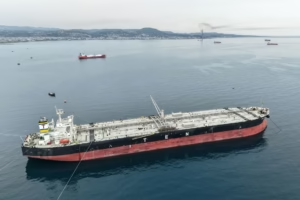
IEA Warns Iran War Triggers Historic Energy Crisis Shock
The International Energy Agency (IEA) has warned that the ongoing oil and gas disruption linked to the Iran conflict and the Strait of Hormuz blockade is more severe than major energy shocks seen in 1973, 1979, and even the 2022 global supply crisis combined. According to Britain Chronicle analysis, the scale of the warning reflects

The International Energy Agency (IEA) has warned that the ongoing oil and gas disruption linked to the Iran conflict and the Strait of Hormuz blockade is more severe than major energy shocks seen in 1973, 1979, and even the 2022 global supply crisis combined.
According to Britain Chronicle analysis, the scale of the warning reflects growing alarm among global energy authorities that geopolitical conflict is now directly reshaping the structure of global energy security, not just temporarily disturbing markets.
The statement comes as tensions escalate around shipping routes in the Gulf and political pressure intensifies from Washington, with financial markets already reacting to sharp swings in crude prices and renewed fears of inflationary spillovers.
What Happened?
Fatih Birol, the executive director of the International Energy Agency, told French media outlet Le Figaro that the current oil and gas shock triggered by disruptions in the Strait of Hormuz is larger in impact than the combined effects of major historical energy crises.
The Strait of Hormuz, a key route for global oil exports, has become a focal point of instability amid the ongoing Iran war. Restrictions and threats surrounding maritime traffic have raised concerns over sustained supply interruptions.
Oil prices have been highly volatile, trading around the $110 per barrel mark in recent sessions. Prices briefly surged following strong warnings from former US President Donald Trump, who demanded that Iran reopen the waterway and signalled further escalation if conditions were not met.
Reports of strikes on Iranian infrastructure, including oil export facilities, have further intensified market anxiety and added to fears of prolonged disruption.
Why This Matters
The Strait of Hormuz handles a significant share of global oil and liquefied natural gas shipments, meaning even partial disruption has immediate global consequences. The IEA warning signals that the current crisis could reshape global energy pricing for an extended period.
Higher energy costs feed directly into inflation, affecting transport, food prices, and manufacturing costs across both advanced and developing economies. The impact is often most severe in poorer nations, where fuel and food account for a larger share of household spending.
Central banks now face a difficult policy environment. Persistent energy-driven inflation could delay interest rate cuts or force renewed tightening, complicating efforts to stabilise fragile post-pandemic economic recoveries.
What Analysts or Officials Are Saying
Market analysts describe the situation as highly unstable, with price movements increasingly driven by political developments rather than supply fundamentals. Some warn that markets are effectively reacting to a series of escalating risks rather than a stable outlook.
Officials linked to international financial institutions, including the IMF, have also cautioned that the conflict is likely to result in slower global growth and higher inflation across multiple regions.
Economists have pointed out that even short-term disruptions in Gulf shipping can trigger disproportionate global effects due to limited spare production capacity and fragile supply chains.
Britain Chronicle Analysis
The IEA’s comparison with past oil crises is significant not only for its scale but for what it reveals about the changing nature of global energy risk. Unlike previous shocks, which were largely supply-driven or politically contained, today’s crisis is deeply intertwined with ongoing military escalation and sustained geopolitical fragmentation.
What makes the current situation more dangerous is its unpredictability. Markets are no longer responding to a single event but to continuous uncertainty over whether shipping routes, production facilities, or infrastructure will be targeted next.
[Britain Chronicle Homepage]
This creates a structural “risk premium” in global oil pricing that could persist even if short-term diplomatic breakthroughs occur. In effect, energy markets are beginning to price in instability as a permanent feature rather than a temporary disruption.
For governments, the challenge is increasingly about managing the economic consequences of geopolitical events they cannot directly control. That shift represents a fundamental change in how global economic stability is maintained.
What Happens Next
The immediate outlook depends on whether diplomatic pressure leads to a reopening of the Strait of Hormuz or whether escalation continues between the United States, Iran, and regional actors.
If disruption persists, analysts expect further volatility in oil and gas prices, with the potential for new inflation spikes in Europe, Asia, and developing economies heavily dependent on imports.
Global financial institutions are preparing updated economic forecasts that are expected to reflect lower growth expectations and higher inflation risks in the months ahead.
Sustainable Empathy Leadership: Preventing Manager Burnout

Global Business Districts Rebound as Economic Hubs: EY Report

AI Floods Creative Market: The Need for Industry Governance

IMF warns Europe on targeted war energy support

Ireland’s Data Center Boom Strains Power and Growth Model
Iran Crisis Pushes EU Economy Off Summit Agenda