Russian influencers break silence on Putin crackdown
Russian influencers Putin criticism crackdown is drawing unusual public attention after several high-profile lifestyle bloggers openly criticised President Vladimir Putin’s government over tightening internet controls and domestic policy failures. According to Britain Chronicle analysis, the rare public backlash from social media figures reflects growing frustration in parts of Russian society affected by digital restrictions, economic
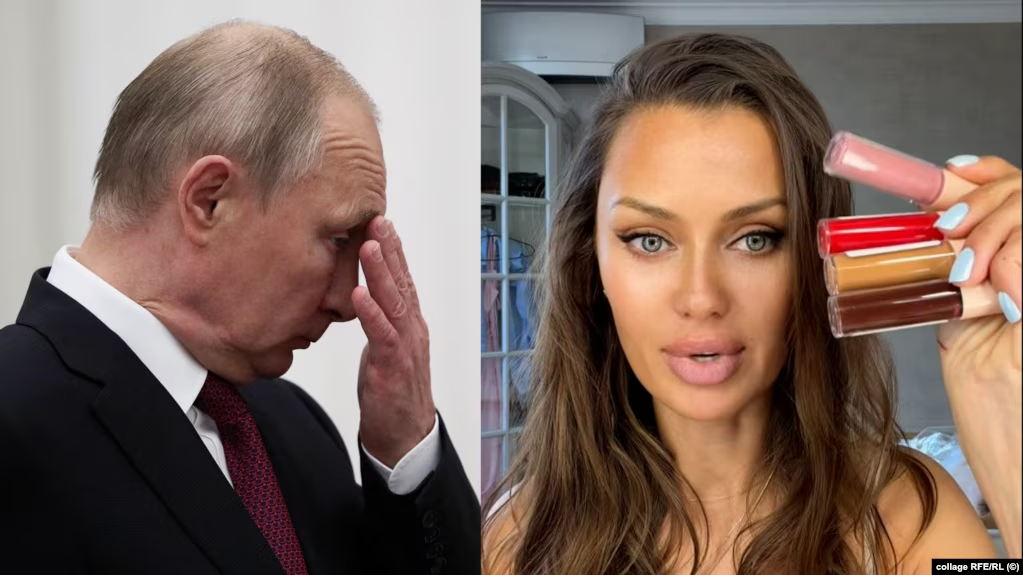
Russian influencers Putin criticism crackdown is drawing unusual public attention after several high-profile lifestyle bloggers openly criticised President Vladimir Putin’s government over tightening internet controls and domestic policy failures.
According to Britain Chronicle analysis, the rare public backlash from social media figures reflects growing frustration in parts of Russian society affected by digital restrictions, economic pressure, and the ongoing war in Ukraine.
The developments come amid increasing limitations on online platforms, rolling internet disruptions, and broader concerns about shrinking digital freedoms inside Russia.
What Happened?
Russian influencers Putin criticism crackdown gained momentum after well-known beauty and lifestyle influencer Victoria Bonya published a widely viewed Instagram post directly addressing the Russian president.
In her message, Bonya, who has millions of followers and now lives in Monaco, described a climate of fear among bloggers, artists, and public officials, while also raising concerns about governance, internet restrictions, and state responses to domestic crises.
Her post quickly went viral, attracting tens of millions of views and tens of thousands of comments, many of which praised her for speaking out despite potential risks.
Another influencer, also based abroad, echoed similar concerns, criticising restrictions on messaging platforms and raising broader economic grievances, including taxation and inequality.
Inside Russia, other social media users and bloggers have also posted emotional messages criticising internet shutdowns, platform restrictions, and the impact on education, communication, and work.
Why This Matters
Russian influencers Putin criticism crackdown highlights an unusual shift in public expression among digital content creators who have typically avoided direct political confrontation.
The growing reliance on online platforms for income and communication has made internet restrictions particularly disruptive for influencers, freelancers, and small digital businesses.
At the same time, tighter controls on platforms such as Instagram and Telegram have significantly reduced access to audiences and monetisation opportunities for many creators.
This environment has intensified frustration, especially among younger users and digital professionals who rely on global platforms for both social interaction and economic survival.
The situation also reflects broader tensions between state security priorities and everyday digital life, where restrictions are increasingly shaping communication habits and information access.
What Analysts or Officials Are Saying
Russian influencers Putin criticism crackdown is unfolding alongside broader concerns about shifting public sentiment inside Russia during prolonged wartime conditions.
Political analysts suggest that recent internet restrictions and platform disruptions have acted as a catalyst for public frustration, even among individuals who previously supported government policy.
Some experts argue that the combination of economic pressure, digital censorship, and war fatigue is contributing to a more visible expression of dissatisfaction in online spaces.
Russian officials, however, maintain that internet restrictions are linked to security concerns and broader efforts to manage information threats during ongoing geopolitical tensions.
Kremlin representatives have also indicated that public concerns raised online are being reviewed, while rejecting claims that leadership is disconnected from domestic issues.
Britain Chronicle Analysis
Russian influencers Putin criticism crackdown signals a rare but notable shift in the visibility of dissent within controlled digital environments.
While Russia’s political system remains tightly managed, the rise of influencer-driven commentary shows how online platforms continue to serve as pressure valves for public sentiment, even under restrictions.
However, this does not necessarily indicate organised opposition. Instead, it reflects fragmented frustration across different social and economic groups impacted by policy decisions and technological constraints.
The key issue is not only censorship but also the growing dependency on digital infrastructure that is simultaneously being restricted and repurposed for state security priorities.
This creates a paradox: as access tightens, public reliance on digital communication increases, making disruptions more politically sensitive and socially disruptive.
Over time, this dynamic may contribute to more visible tensions between state policy objectives and everyday digital life, even without formal political mobilisation.
What Happens Next
Russian influencers Putin criticism crackdown is likely to continue evolving as internet restrictions deepen and digital regulation expands further across platforms.
Analysts expect that additional controls on messaging apps, advertising, and content distribution could further limit influencer activity inside Russia.
At the same time, public commentary may continue shifting toward indirect or coded criticism, particularly on platforms that remain accessible through VPNs or external networks.
Officials are also expected to maintain a security-driven justification for internet controls, particularly in relation to ongoing geopolitical tensions.
The broader trajectory suggests increasing friction between digital expression and regulatory oversight, with potential for further tightening if current trends continue.
Outer Hebrides Wildflowers Bloom: Scotland’s Machair Dream

Cádiz Ranked Among Europe’s Best Cheap Beach Holidays

Forbes 30 Under 30 Europe 2026 Highlights UK Talent Rise
Ten Lifestyle Group shares signal overvaluation concerns
Europe’s 12 Must-Visit Art Museums for Travelers

Chris Stapleton Scores Chart Hit With Mumford Duet