UK Protests Turn Violent Across Cities
Tensions erupted across several UK cities on Saturday as far-right and anti-racist groups held rival demonstrations, leading to arrests and clashes with police. The unrest followed earlier violence in Belfast and Southampton, adding to growing concern over public order and political division. In Belfast, unrest earlier this week left homes and vehicles damaged after a
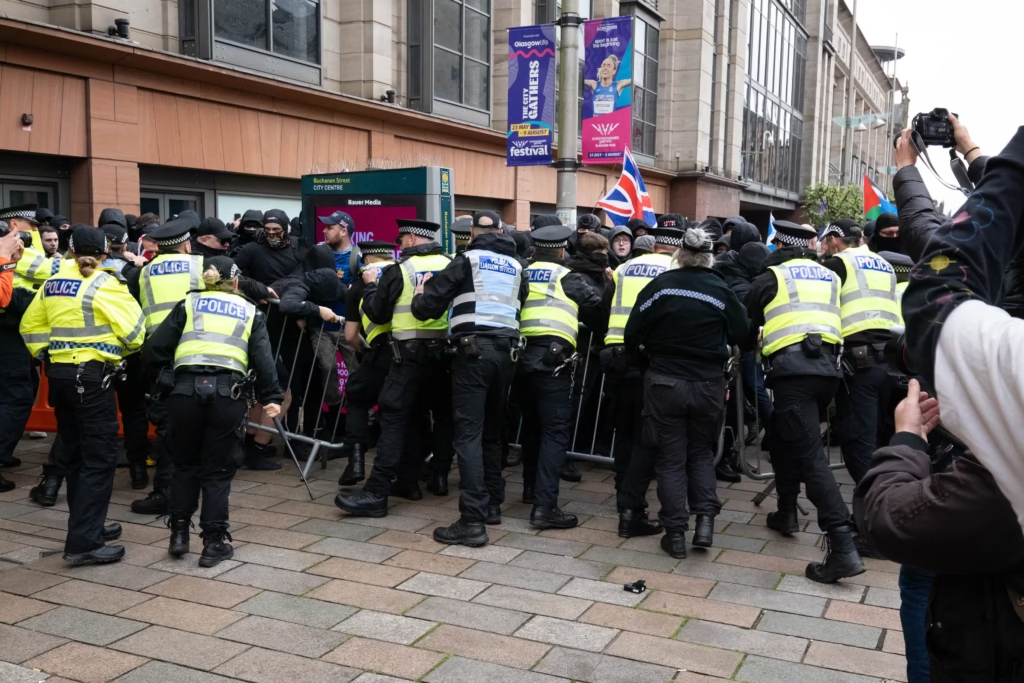
Tensions erupted across several UK cities on Saturday as far-right and anti-racist groups held rival demonstrations, leading to arrests and clashes with police. The unrest followed earlier violence in Belfast and Southampton, adding to growing concern over public order and political division.
In Belfast, unrest earlier this week left homes and vehicles damaged after a serious knife attack involving Stephen Ogilvie, 44, who lost an eye in the incident. A man, Hadi Alodid, 30, originally from Sudan, has been charged with attempted murder. The violence triggered a wave of protests and counter-reactions across parts of the UK.
Further tensions escalated in Southampton after riots linked to the death of Henry Nowak, an 18-year-old student. Five people were later jailed for violent disorder connected to those events. The case has continued to fuel anger and demonstrations in different regions.
On Saturday, protests spread to cities including Brighton, Liverpool, Sheffield and Glasgow. In Sheffield, a rally organised by a group calling itself Raise the Colours drew attention. The group describes itself as a movement focused on unity and patriotism and campaigns against illegal immigration.
Police in South Yorkshire confirmed five arrests during the Sheffield demonstration. Four men were charged with public order offences, while another was arrested on suspicion of assault. A 17-year-old was also detained following an alleged attack on an emergency worker.
Authorities said managing the situation was difficult due to the presence of counter-protesters. However, police stated they were able to keep both sides under control and prevent major escalation.
In Brighton, a far-right group known as South East Patriots gathered to demand stricter border controls and tougher immigration enforcement. At the same time, a large counter-demonstration called Carnival Against Fascism took place.
More than 20 anti-racist groups joined the Brighton counter-protest. Among those present was DJ Fatboy Slim, who joined calls for unity against far-right movements. Organisers said their aim was to show that extremist views were not welcome in the city.
Small clashes were reported near Brighton railway station, where groups faced off under police supervision. Officers contained far-right protesters along Terminus Road while counter-demonstrators gathered nearby. Sussex Police confirmed arrests linked to breach of peace and alleged assaults on officers.
In Liverpool, tensions also flared in the Walton area as rival groups gathered. Police reported at least one arrest for breach of the peace. Witnesses described chants calling for mass deportations during the confrontation between opposing groups.
In Glasgow, thousands joined a “reclaim our streets” rally organised by Stand Up to Racism. A smaller counter-protest group was separated by police barriers. The atmosphere became increasingly tense as officers worked to prevent direct contact between the groups.
Reports from Glasgow indicated projectiles, including drink cans, were thrown during the standoff. Some individuals in the counter-protest group were seen making offensive gestures, while others wore face coverings. Flags from different political causes were displayed by both sides, highlighting the deep divisions present at the demonstration.
Police across all cities increased their presence to prevent escalation. Several arrests were made for public order offences, assault, and breach of the peace. Officers said coordination between forces was key to maintaining control during simultaneous protests.
The unrest comes at a time of heightened political tension in the UK. Speaking at a campaign event, Greater Manchester Mayor Andy Burnham warned that political discourse is becoming increasingly divided. He said communities are drifting apart and warned against growing polarisation.
Burnham said the country risks moving toward a more “poisonous” political climate if tensions continue to rise. His comments reflect broader concerns among politicians about the direction of public debate and community relations.
Across the UK, officials are now facing increased pressure to manage rising demonstrations linked to immigration, identity, and public safety issues. Police say they will continue to monitor similar events closely in the coming weeks.
As investigations continue, authorities are urging calm and warning against further violence. The events of Saturday highlight how quickly local tensions can escalate into nationwide unrest when political and social divisions collide.