
US-Iran Talks Collapse as Nuclear Deal Standoff Deepens
A high-level round of negotiations between the United States and Iran has ended without agreement after marathon discussions in Pakistan failed to produce any breakthrough. The talks were aimed at halting an escalating conflict entering its seventh week and reducing the risk of wider regional instability. According to Britain Chronicle analysis, the breakdown highlights how
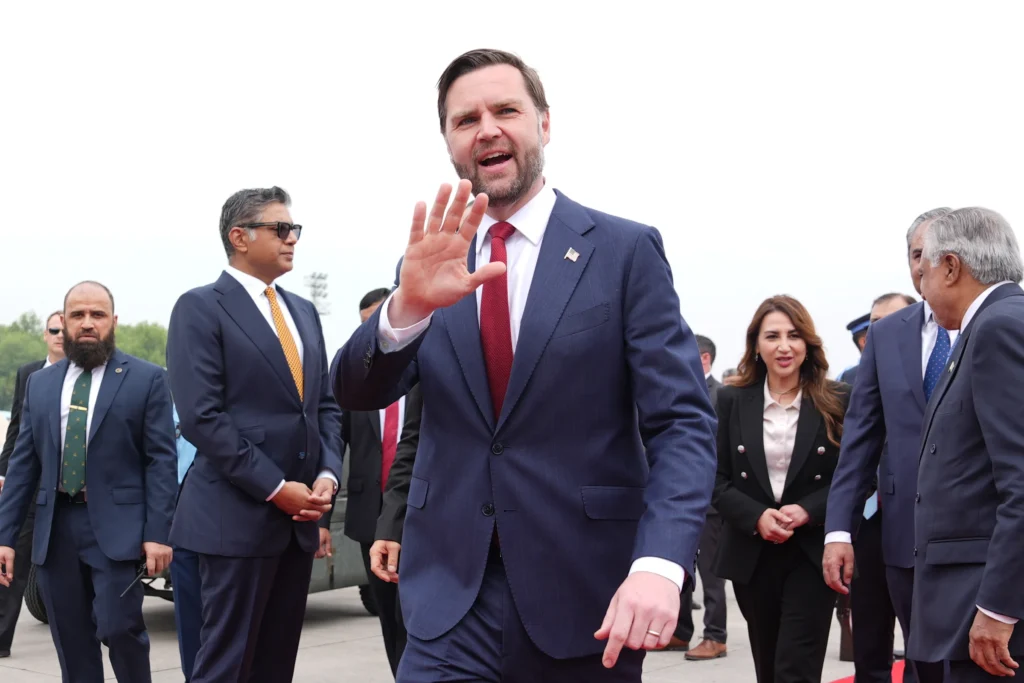
A high-level round of negotiations between the United States and Iran has ended without agreement after marathon discussions in Pakistan failed to produce any breakthrough. The talks were aimed at halting an escalating conflict entering its seventh week and reducing the risk of wider regional instability.
According to Britain Chronicle analysis, the breakdown highlights how deeply entrenched mistrust has become between Washington and Tehran, with both sides now locked into rigid positions that leave little space for compromise or phased de-escalation.
The collapse comes at a sensitive moment for global energy markets and maritime security, with rising tensions around key shipping routes and growing fears that diplomatic options are narrowing faster than military rhetoric is escalating.
What Happened?
The negotiations brought together US Vice President JD Vance and senior officials from the Trump administration with Iranian representatives in what was described as the most significant direct engagement between the two sides since the 1979 Iranian revolution.
The discussions stretched over an extended session but ended without any agreement. The central focus was Iran’s nuclear programme, with Washington demanding firm guarantees that Tehran would not pursue nuclear weapons capability or maintain infrastructure that could enable rapid weaponisation.
US officials concluded that Iran refused to provide the assurances required. Vice President Vance later confirmed that the absence of an affirmative commitment on nuclear restrictions made it impossible to move forward.
The talks were also linked to broader security concerns, including the stability of the Strait of Hormuz, a vital global energy corridor. Any disruption there would carry immediate consequences for oil and gas supplies worldwide.
Despite the failure of diplomacy, no clear announcement was made regarding future military action or escalation. However, earlier warnings from US leadership had suggested that further pressure measures remained on the table.
Why This Matters
The collapse of talks significantly increases uncertainty in an already volatile geopolitical environment. The Middle East conflict is now entering a more unpredictable phase, with no diplomatic framework currently in place to slow escalation.
Energy markets are particularly sensitive to developments in the region. Even the perception of instability around the Strait of Hormuz has historically triggered spikes in oil prices, shipping insurance costs, and global supply chain disruption.
Beyond economics, the failure of negotiations reduces the chances of a controlled off-ramp to the ongoing conflict. Without structured dialogue, the risk of miscalculation or unintended escalation rises sharply.
For both Washington and Tehran, the breakdown also signals a hardening of strategic positions, where nuclear policy is increasingly tied to broader questions of deterrence, influence, and regional power balance.
What Analysts or Officials Are Saying
US officials have maintained that Iran’s refusal to provide verifiable nuclear assurances remains the core obstacle to any agreement. The American position continues to emphasise strict limits on enrichment and clear restrictions on any pathway to weaponisation.
Iranian representatives, according to diplomatic reporting, argue that their nuclear programme remains peaceful and that external demands amount to political pressure rather than legitimate security concerns. They have resisted binding constraints they view as undermining national sovereignty.
Security analysts warn that while immediate escalation is not inevitable, the absence of dialogue significantly reduces crisis management capacity. They also note that parallel military rhetoric from both sides is contributing to a more fragile and reactive environment.
International observers have expressed concern that repeated diplomatic failures are creating a cycle where trust erodes further after each round of talks, making future negotiations more difficult to restart.
Britain Chronicle Analysis
The failure of the Pakistan negotiations reflects more than just a single diplomatic breakdown. It signals a structural deadlock in US-Iran relations where neither side appears willing to soften core demands.
Washington’s insistence on absolute nuclear guarantees leaves little flexibility for gradual compromise, while Tehran’s resistance is rooted in long-standing concerns about sovereignty and regime security. This creates a diplomatic gap that talks alone struggle to bridge.
At the same time, the wider strategic environment is intensifying pressure. Global energy dependence on Middle Eastern routes, combined with heightened military signalling, means that even small incidents can now carry outsized consequences.
The danger is not only escalation through intent but escalation through momentum. When negotiations fail but pressure continues, both sides may begin acting on worst-case assumptions rather than shared understandings.
What Happens Next?
In the immediate term, attention will focus on whether diplomatic backchannels can be reopened or whether both sides shift further toward coercive strategies. The lack of clarity on next steps leaves multiple scenarios open, including renewed sanctions pressure or potential military signalling.
Energy markets are expected to remain unstable as traders react to shifting risk assessments around shipping routes and regional security. Any further disruption could quickly translate into global price volatility.
The key risk ahead is escalation without structured communication, where actions replace dialogue and reactions replace negotiation. If that pattern continues, the conflict could widen beyond its current containment.
UK Nuclear Deterrent: Vital for Britain’s National Defence

Ministers Urged to Share Mandelson Vetting Files Amid Disclosure Row

UK Considers Under-16 AI Chatbot Ban Amid Safety Push

MP Calls for National Biosecurity Strategy UK at Core of Security

Connor Naismith: Why Blue Labour is True Labour

NHS Legal Anomaly Costs Billions: Calls for Urgent Reform