
US UK leadership crisis shakes democracies
US President Donald Trump and UK Prime Minister Keir Starmer are under growing political pressure at home. Both leaders face low approval ratings and strong internal party tension. Their struggles reflect a wider US UK leadership crisis across both countries. Voters are unhappy, impatient, and unsure about long term direction. This rising instability shows deeper
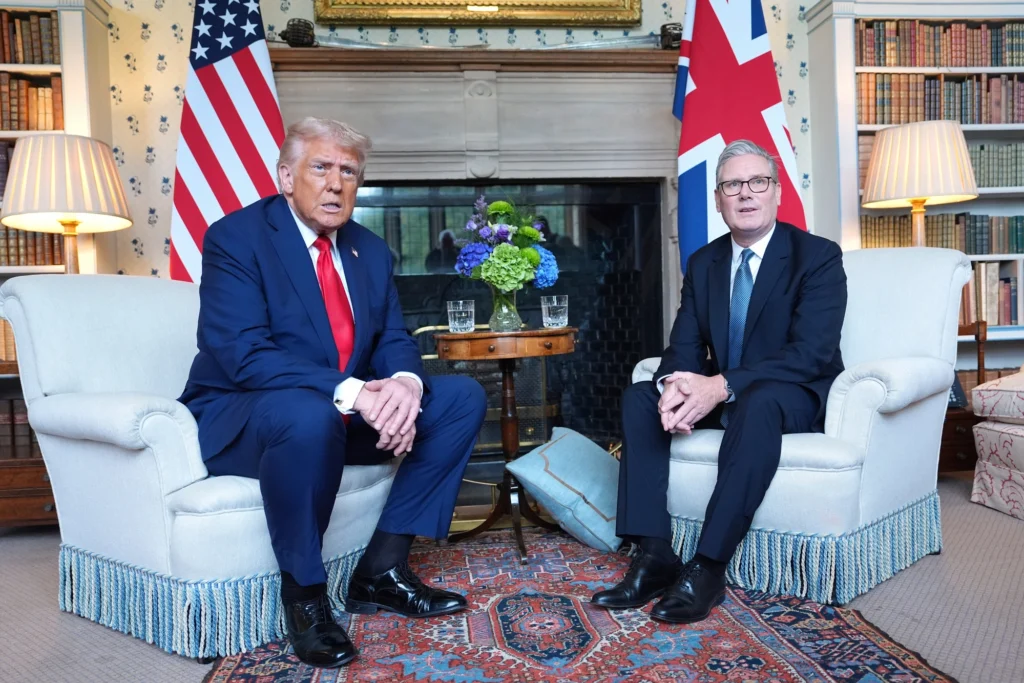
US President Donald Trump and UK Prime Minister Keir Starmer are under growing political pressure at home. Both leaders face low approval ratings and strong internal party tension. Their struggles reflect a wider US UK leadership crisis across both countries. Voters are unhappy, impatient, and unsure about long term direction. This rising instability shows deeper problems in modern democratic systems and public trust.
In both the United States and the United Kingdom, leadership change has become more frequent. Governments often struggle to last without crisis. In the UK, prime ministers have changed quickly since Brexit. In the US, presidents face strong division after every election cycle. This constant change shows that voters now remove leaders faster when promises are not met. Elections feel less like long term choices and more like punishment votes. This pattern repeats again and again across both nations.
A major reason behind this US UK leadership crisis is economic stress. Many people face rising living costs, weak wage growth, and housing pressure. Inflation and inequality make daily life harder for many families. At the same time, trust in government has fallen. Surveys show very low confidence in political institutions. Social media adds more pressure. News spreads in seconds, and public anger spreads even faster. This creates a cycle where frustration leads to political change, but problems remain.
In the United Kingdom, Brexit did not reduce division. Instead, it made political splits deeper. The country has seen repeated leadership changes and growing public anger. Traditional parties are under pressure from both sides. New movements are rising as voters look for alternatives. Immigration and identity debates also increase tension. Groups like Reform UK are gaining support, showing how fragmented the political system has become. Both major parties now face challenges from smaller political forces.
In the United States, politics is also deeply divided. Power often swings between the two main parties. President Trump remains a central figure in national politics, shaping both support and opposition. Congress is strongly split, and major reforms are hard to pass. Many voters feel that neither party solves key issues like cost of living, healthcare, and jobs. Political polarization has created gridlock, where cooperation between parties is rare even during urgent crises.
Digital platforms have made politics faster and more emotional. People react quickly to breaking news and viral posts. This reduces patience for slow political change. It also increases distrust, as users often see conflicting information. Algorithms push people into echo chambers where they mostly see opinions that match their own views. As a result, political debate becomes more emotional and less focused on solutions. This deepens the US UK leadership crisis further.
Both countries also face structural political problems. The two party system in the US forces voters into strong camps. In the UK, shifting coalitions and weak majorities create unstable governments. Every election feels like a reset. This prevents long term planning and increases public frustration. Government paralysis becomes common when leaders cannot agree on basic policy direction.
Experts warn that without reform, instability may continue in both countries. Voters demand fast results, but political systems move slowly. Leaders in both nations face the same challenge: rebuild trust while managing economic pressure. If this gap continues, more leadership changes are likely in the coming years, keeping both democracies under constant strain.