
Waldmuller Show Enters Final Week In London
The National Gallery’s landmark exhibition of Austrian painter Ferdinand Georg Waldmuller enters its final week today, with visitors having just one more week to catch the first ever UK show devoted entirely to the nineteenth century artist’s landscape paintings. Waldmuller: Landscapes closes on September 20, bringing to an end a run that has finally introduced
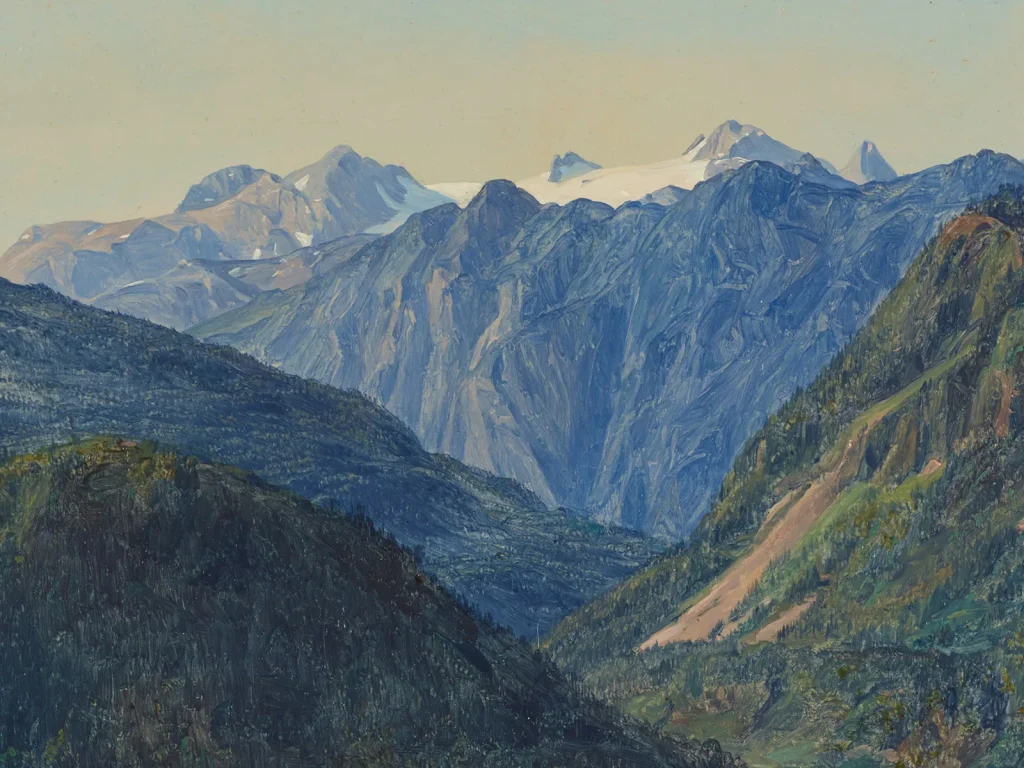
The National Gallery's landmark exhibition of Austrian painter Ferdinand Georg Waldmuller enters its final week today, with visitors having just one more week to catch the first ever UK show devoted entirely to the nineteenth century artist's landscape paintings. Waldmuller: Landscapes closes on September 20, bringing to an end a run that has finally introduced British audiences to one of Austria's most significant historical painters.
Organized in collaboration with Vienna's Belvedere Museum, which loaned the majority of the works on display, the free exhibition occupies Room One at the National Gallery and represents the first exhibition anywhere in the world devoted exclusively to Waldmuller's work as a landscapist. Born in 1793 and active until his death in 1865, Waldmuller ranks among the most important figures within Austria's Biedermeier period, an era spanning roughly from the Congress of Vienna in 1815 through the European revolutions of 1848.
Beyond his own artistic output, Waldmuller held considerable influence as a teacher, shaping subsequent generations of Austrian painters through his own dedication to observational accuracy in depicting the natural world. Exhibition co-curator Sarah Herring has noted that while Waldmuller is generally categorized as a Biedermeier artist, his work carries a quality that feels both moralizing and unflinchingly honest, qualities that give his paintings a surprisingly modern resonance even more than a century and a half after his death.
The exhibition traces Waldmuller's engagement with several distinct landscapes throughout his career, beginning with scenes from the Salzkammergut, an alpine region near Salzburg characterized by dramatic mountain and lake views rendered with what critics describe as photographic clarity and consistently bright, intensely colored skies. The show also features his later work depicting Sicily, painted during a series of autumn visits the artist made to the Italian island between 1844 and 1846, including striking renderings of ancient Greek ruins at sites including the Valley of the Temples at Agrigento and the Greek theatre at Taormina with its views toward Mount Etna.
Waldmuller's connection to Britain, though limited during his own lifetime, was not entirely absent. The artist visited London in 1856, and even Queen Victoria and Prince Albert reportedly acquired examples of his work during that period, making this current National Gallery exhibition something of a delayed homecoming for paintings that once genuinely intrigued the British royal court nearly one hundred seventy years ago.
Critics reviewing the exhibition have drawn comparisons between Waldmuller's meticulous attention to natural detail and the British Pre-Raphaelite movement, though his own artistic approach developed independently across the European continent rather than through direct exchange with that later British school. This parallel development of similarly detailed, nature focused painting traditions across different European countries during the nineteenth century offers visitors an interesting point of comparison as they move through the gallery's collection.
The London exhibition follows directly from a larger Waldmuller retrospective staged earlier this year at the Belvedere Museum in Vienna itself, titled Ferdinand Georg Waldmuller: True to Nature, which ran from February through June and positioned the artist's landscapes within the broader context of European contemporaries including John Constable and Jean-Baptiste Camille Corot. That earlier Vienna exhibition helped establish the scholarly and curatorial groundwork that made this subsequent, more focused London presentation possible.
As the exhibition's final week begins today, visitors still hoping to experience Waldmuller's luminous depictions of the Austrian and Sicilian landscapes have a limited window remaining before the show closes permanently on September 20, after which these particular works will return to their home institutions across Austria and beyond.


